Meeting the need for water in the 1917 Desert Campaign
I’ve always been interested in the Campaigns in the Middle East, probably due to films such as “Gallipoli” and “The Light Horsemen”. When I started to really dig into the RE Mounted History an area that does offer a lot of information is the Campaigns in Palestine and Mesopotamia. While I am about to finish an post on the engineer work put in place for the attack at Beersheba on the 31 Oct 1917 as part of the 3rd Battle of Gaza, I have been distracted by current Middle East events in the Gaza area.
The thing that has created the distraction is the media cries that water has been cut to Gaza and that the locals don’t have access to water.

THE BRITISH ARMY IN THE SINAI AND PALESTINE CAMPAIGN, 1915-1918 (Q 12704) Australian Light Horsemen, Australian and New Zealand Mounted Division, watering their horses at Ain es Sultan (Elisha’s Well). Copyright: © IWM. Original Source: http://www.iwm.org.uk/collections/item/object/205067316 I’m not going into the politics or side taking, those are discussions that can take place else where away from this history blog. I want to consider the facts that the British and Imperial Forces fought the Ottomans over this very ground in 1917 over three battles. In this theatre, water is a key requirement because without it you cannot fight, particularly in the period of the Great War. There are three key users of water in this type of warfare:
- Men
- Horses, Mules, Camels and Donkeys.
- Train Engines.
The Ottomans held the wells at Gaza and also the significant wells at Beersheba off to the east (the end of the Ottoman Defensive Line). What existed south of this point were considered as minor wells and were used by the Bedouin Arabs that lived and migrated in the area.
To meet the water requirements for the Egyptian Expeditionary Force (EEF) there would be a need to supply water either from existing supply and sources back in Egypt or to create/ exploit water sources locally.
The Royal Engineers could meet the requirements of both options.
A pipeline was created to push water forward across the Sinai, following a coastal route, from the Nile and would be added to as the EEF advanced. Also all of the EEF Sapper units would have water development and water supply as one of their key roles in the campaign.

The Egyptian pipeline under construction with RE Works supervision and Egyptan Labour Corps personnel By January 1917 the British and Imperial Forces of the EEF had crossed the Sinai and were established at El Arish and were raiding Rafah (9 Jan 1917) to the north. At El Arish the pipeline from the Nile had arrived and was providing 230,000 gallons of pumped water per day.
By March 1917 the EEF had pushed forward to south of the town of Gaza. As they moved forward the sappers worked to repair and develop sources of water at a local level.
- On the 12th March 410 and 412 Field Companies RE moved to Rafah and developed the water supply in the local area, good quality water was found in the Sand Dunes near the sea and many tube wells were sunk and all provided good yields. 412 Fd Coy RE and support from the Egyptian Labour Corps troops errected 100,000 gallon water storage in this area.
- North of Rafah at Khan Yunis, 437 Fd Coy RE repaired the the well and the pumping plant to bring it back on line.
- By 21 March, in the Khan Yunis area 439 Fd Coy ARE had sank wells to provide a yield of 100,000 gallons per day.
- Further deep wells were developed at Khan Yunis between the town and the coast to provide 130,000 gallons per day.

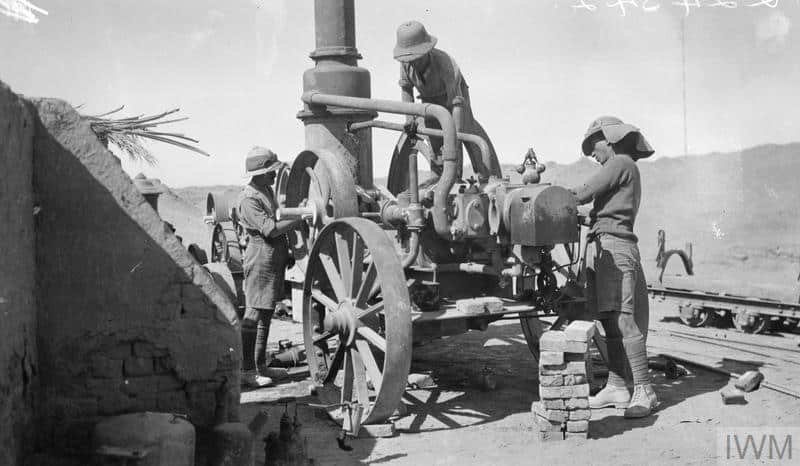
Norton Well Driving apparatus could be used to drive both shallow and deep wells – ground conditions dependant 
THE BRITISH ARMY IN THE SINAI AND PALESTINE CAMPAIGN, 1915-1918 (Q 12622) Royal Engineer’s pumping water from the subterranean fountain from which Solomon’s Pools reserve are fed. Copyright: © IWM. Original Source: http://www.iwm.org.uk/collections/item/object/205067244 The EEF had created their front line north of the town of Deir El Balah. In this area the RE units had created several shallow wells which were giving very good yields. It was also found that the area of Wadi Ghazzee which ran from the coast, just north of Deir El Balah, and headed East/South East into the Desert offered good potential and as such would allow the EEF to widen it’s front against the Ottomans and not to be constrained to the narrow coastal strip.

When exploring the Wadi Ghazzee area it was found that there was large supplies of water, this was particularly the case towards Shellal, which had natural springs.

A large part of the water used for the 1st and 2nd battles of Gaza (March and April 1917) were provided from these sources and also from the pumped pipeline from El Arish. It should also be noted that even once wells were developed work did not stop on them, improvement works were constantly happening and it was noted that the deep well at Khan Yunis had been improved to produce 168,000 gallons per day by the 27th March 1917 (the second day of the 1st battle of Gaza).
Working hand in hand with the water supply was the pushing forward of the rail network, which had been pushed forward to Deir El Balah. this allowed troops, stores and supplies to be moved forward, part of this was water supplies from the end point of the Nile Water Pipe at El Arish. Water storage was created at the rail head to store this train shipped water. The wells in the Deir El Balah area were connected to pumping system at the rail head and this allowed for water to be pumped to a water storage area near Khan Umm Jerra in Wadi Ghazzee. This storage area provided 90,000 gallons of stored water and water points for 300 Camels and 300 horses at a time, this was all in a location that could not be observed by the Ottomans.

THE BRITISH ARMY IN THE SINAI AND PALESTINE CAMPAIGN, 1915-1918 (Q 12873) Members of The Royal Engineers and the Egyptian Labour Corps restoring wells and cisterns at Beitin (Bethel), which was captured by the 180th Brigade, 60th Division, on the 29th December 1917. Copyright: © IWM. Original Source: http://www.iwm.org.uk/collections/item/object/205248126 After the close of the 1st battle of Gaza, (26&27 March 17), 410th and 413th Fd Coy REs move into Wadi Ghazzee and sink 21 wells in the gravel areas, while the majority are shallow wells some go as deep as 60 feet, these wells end up providing 40,000 gallons per day. These field Companies are then joined by the Sappers from 54th Infantry Division who create more wells in the Wadi Ghazzee and also clean and repair old water cisterns, these additions provide 70,000 gallons daily

THE BRITISH ARMY IN THE SINAI AND PALESTINE CAMPAIGN, 1915-1918 (Q 12881) Members of The Royal Engineers and the Egyptian Labour Corps restoring wells and cisterns at Beitin (Bethel), which was captured by the 180th Brigade, 60th Division, on the 29th December 1917. Copyright: © IWM. Original Source: http://www.iwm.org.uk/collections/item/object/205248134 The 2nd Battle of Gaza occurs on the 17-19 April and while it is more successful than the first battle it does not dislodge the Ottomans from Gaza so work must continue to support the troops holding the area in preparation for the future actions.
In May 1917 the deep wells at Khan Yunis were upgraded with pumping plants, this allowed production to increase, for one of the deep wells on its own the production increased to 80,000 gallons per day. On the 11 May the 220th Army Troops RE started work on a 250,000 gallon Water Reservoir in the Khan Yunis area.

Gwynnes’ Portable Pumping Set – Capacity 6000 gallons per hour 
Aster- Gwynnes’ Pump set mounted on wheels By the end of May work continued to create new wells in the Wadi Ghazzee area, these added a further 120,000 gallons and had pipes laid to forward water dumps, complete with concrete water tanks and sunshades.

THE BRITISH ARMY IN THE SINAI AND PALESTINE CAMPAIGN, 1915-1918 (Q 12881) Members of The Royal Engineers and the Egyptian Labour Corps restoring wells and cisterns at Beitin (Bethel), which was captured by the 180th Brigade, 60th Division, on the 29th December 1917. Copyright: © IWM. Original Source: http://www.iwm.org.uk/collections/item/object/205248134 By this point in time the pipeline from Egypt had reached it’s final limit and was a 150 miles long and maintained a pumped pressure at all of it’s delivery points.
The gravel wells in Wadi Ghazzee were continuing to produce plenty of water but the quality was classed as Brackish but was still classed as potable (drinkable) water. The springs at Shellal had been enhanced and were providing 250,000 gallons per day, while the springs at El Qamle and Bir Esani continued to provide good yeilds (100,000 gallons per day at least per day)
On the front line sector of El Mendur (from the coast and directly across the front of Gaza town) it was found that the local wells were sufficient to supply the troops on the front, and as such the localised pipeline from Deir El Balah and the Wadi Ghazzee reservoirs.
It was recognised that there would be further actions to take Gaza and as such the Corps developed extra wells in the dunes areas at the mouth of the Wadi Ghazzee (at the coast, west of Deir El Balah), these wells would yield brackish but drinkable water of sufficient quantity to supply 2 infantry divisions as emergency supply if required.
By June 1917 220th Army Troops RE took over the Khan Yunis water area to free up RE Field Companies for front line/ forward area works. This was as part of the preparation work for what would be expected as the 3rd battle of Gaza. During June and July the water sources between Deir El Balah and Shellal were fully developed and provided with mechanical pumping plants.

Mechanical engines would often be used to power the larger pump sets at the larger yielding wells. In September 1917, the Sheikh Abbas Sector (the eastern sector in front of Gaza Town and joined the El Mendur Sector) now had deep wells yeilding 123,000 gallons per day, with having this source close to the front means that there is now reduced requirement to move water forward from Deir El Balah and Wadi Ghazzee. At the same time 410th Fd Coy RE was installing mechanical pumps on the smaller wells in this sector.

A lightweight mechanical pump found to be ideal for the smaller and shallow wells – Rotorplunge Pump and Lister Petrol Engine. The last major piece of water works in this area was the installation of a pumping plant at the deep well at the mouth of Wadi En Nukhabir (located 2 miles South West of Deir El Balah), this work was carried out by 496th Field Coy RE.
By the start of September the plan for the 3rd Battle of Gaza was being developed and the plan is to attack the far Eastern end of the Gaza defensive line at the town of Beersheeba, and as such the focus for forward areas water development and supply was to push away from the coastal area and start to develop further east into the Wadis and desert areas. This work along with the railway expansion will be covered in it’s own blog post hopefully before Christmas.

One of the developed well sites believed to be at El Baqqar out in the desert on the route to Beersheba as preperation for the 3rd battle of Gaza. So from all of the information above it is possible to see how the British and Imperial forces were able to cross the Sinai desert and take the battle to the Ottomans. Also while the pipe line from Egypt helps to sustain the force and allows it to push forward, it is key that sappers push ahead and develop the existing sources and develop significant new water sources. Once more equipment and time permitted then the new wells are improved and fitted with pumps and reservoirs.

THE BRITISH ARMY IN THE SINAI AND PALESTINE CAMPAIGN, 1915-1918 (Q 13165) Watering horses and camels outside Beersheba Station, 1st November 1917. This area was captured by the 4th Australian Light Horse Brigade on the 31st October 1917 and became the Headquarters of the Desert Mounted Corps in November. Copyright: © IWM. Original Source: http://www.iwm.org.uk/collections/item/object/205194793 The questions that I currently have going around in my mind in relation to the current conflict are:
- Are any of the deep and shallow wells from 100 years ago still in use? If they are what type of yields are they producing?
- Considering that the Corps was developing water extraction both in terms of shallow (30 feet) and Deep (100 feet) depth and from a variety of locations and sources, have the Palestinians developed their own set of wells and extraction points?
- There has been plenty of discussion about the use of desalination plants, but accepting that these can be expensive, but has there been any work by any of the aid agencies to look at creating more localised water extraction?

The Great War locations of Front Line, Deir El Balah, Khan Yunis and Rafah shown on a modern map og the Gaza Strip. I don’t know the answers to the above questions but it does strike me that modern conflicts forget to look back at solutions that may actually be more viable but have been forgotten due to the advance of technology. It is clear that there was good viable sources of potable water right across the area of Gaza and Sapper field units were able to exploit them quickly and once established they could be improved in infrastructure terms and this would in turn improve the yield.
I wonder what could be done by 8 people with some modern equipment, a modern version of the Norton Tube Well driving apparatus, a robust submersible pump and some modern flexible/ collapsible storage tanks. Its just a thought?
Notes and references:
1. The History of the Corps of Royal Engineers, Volume 6. (1952) Institution of Royal Engineers.
2. Lt Col EWC Sandes DSO MC RE (1937), The Royal Engineers in Egypt and the Sudan 1800-1936, The Naval & Military Press.
3. http://www.longlongtrail.co.uk – An excellent site for information on the Great War.
4. Lt DC Howell-Price (1914), The Light Horse Pocket Book, Originally published by Angus & Robertson Ltd, Reprinted in 2020 by The Kangeroo Feather Publishing Company.
5. Instruction in Military Engineering (Part 5)- Miscellaneous (1898) School of Military Engineering, Fifth Edition, War Office.
6. Military Engineering Volume 6 Water Supply (1922), His Majesty’s Stationery Office.
7. David Murphy (2008), The Arab Revolt 1916-18, Osprey Publishing
8. Mike Chappell (2005), The British Army in World War 1 (3) – The Eastern Fronts, Osprey Publishing
The Royal Engineer that improved Water Supply in the Middle East
In the Great War the biggest challenge facing operations in the Palestine Theatre of operations was to try and to provide water to the troops and 1916 saw the troops of the Egyptian Expeditionary Force push out into the Sinai Desert with the aim of taking the fight to the Ottomans. However to fight in the desert, one of the essential logistic items is that of water. Without sufficient water the range of operations would always be severely limited.
Therefore there was a need to develop existing wells to increase production and also to create new wells. The Royal Engineers had equipment to create wells but the difficulty was to develop equipment that could be more portable to allow the provision of water as the troops advanced, as well as having the ability to produce water in an appropriate quantity.

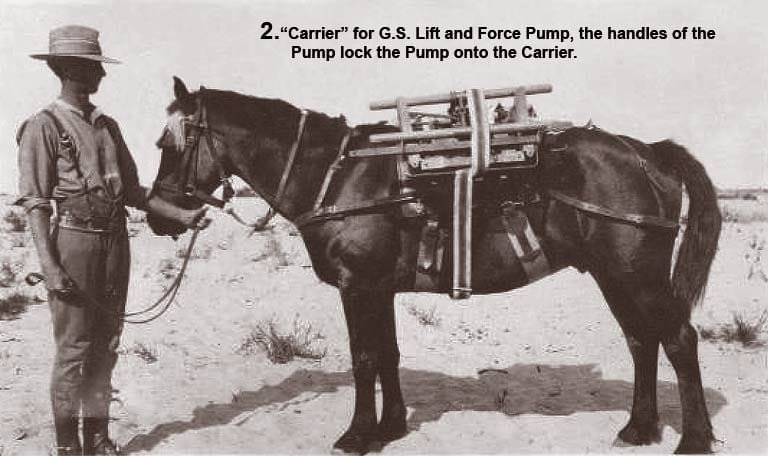
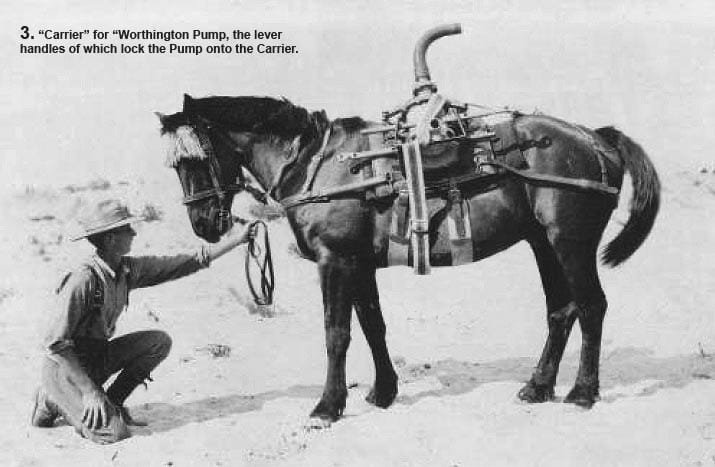
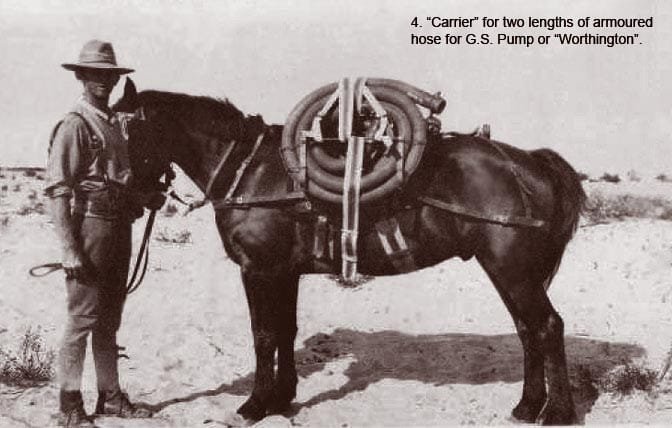
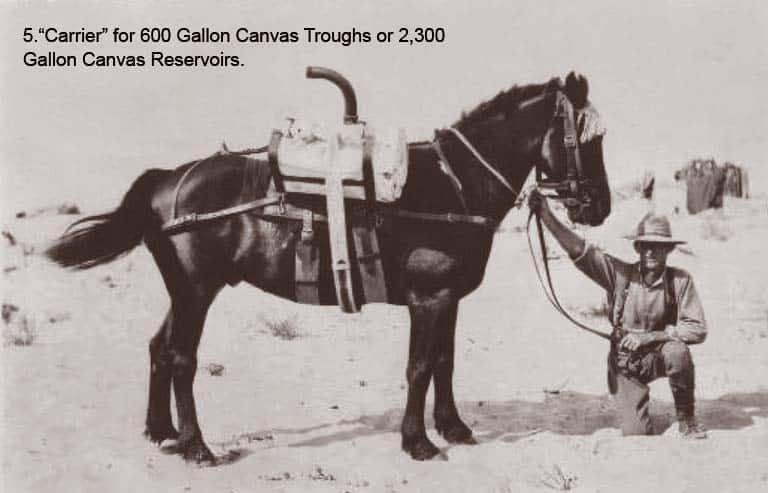
What appears to be a shallow well with a lift and force pump A Royal Engineer attached to the ANZAC Mounted Division, in 1916 developed a more portable system of equipment that could be carried by horses and deployed quickly by a Royal Engineer Mounted Troop. The officer was Major Alexander RE.

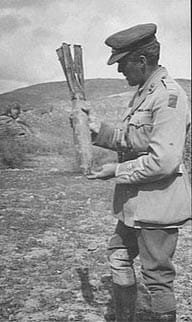
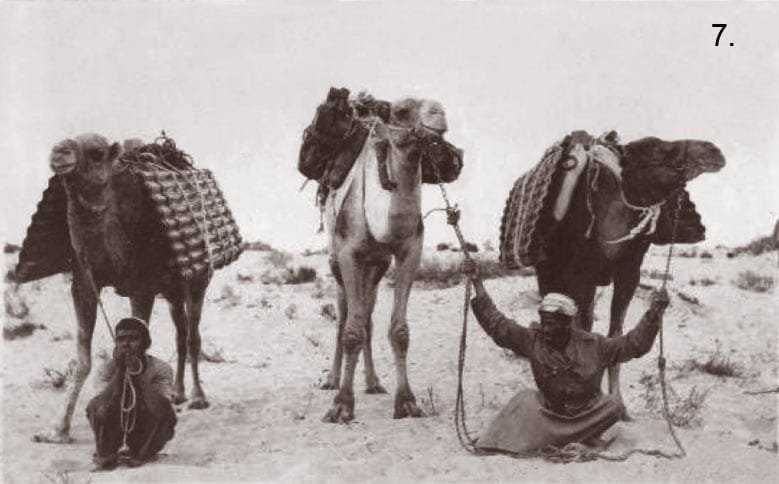
Maj Alexander RE in 1918 examining a Turkish “Air torpedo” Major Alexander looked at the existing deployable equipment and realised that a large amount of it was transported by Camel, while this allowed it to get out to the remote areas that it was required in, it was too slow and certainly could not keep up with the Mounted Divisions during operations, as such the camel mounted system was better suited for follow on operations. What was needed was a lighter system.

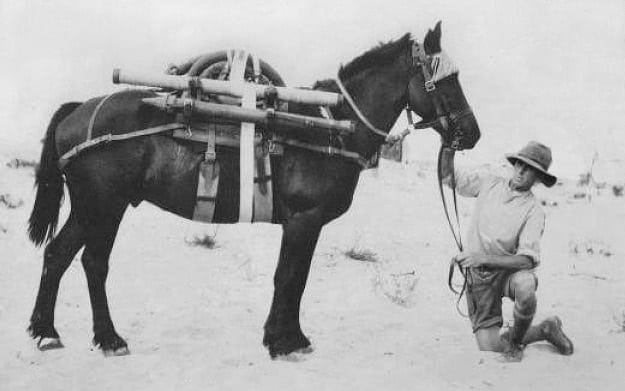
It became clear to Major Alexander that the whole system had to be modified to be fitted on pack horses, this would allow the equipment to be utilised by the RE Field Troops attached to the Mounted Brigades and still keep up with them as they moved.
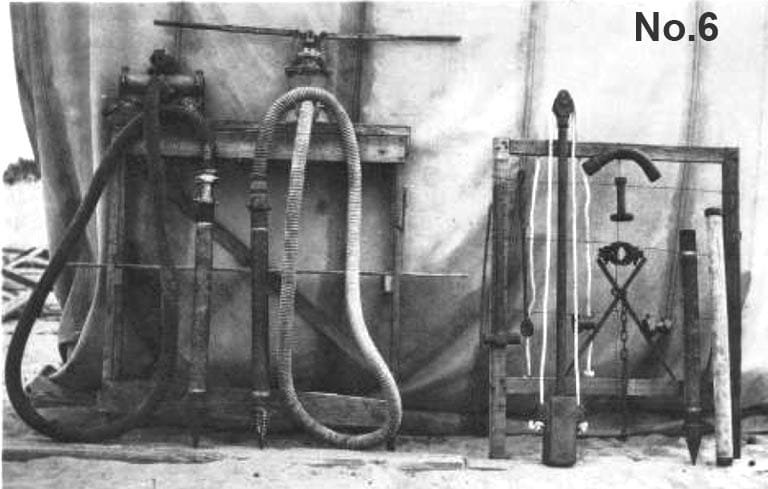
His system developed what was known as a Spear tip for the driving head of the pipe that would be sunk into the ground – this appears to be very similar to what the Sappers of my era would recognise as the driving head for a Camoflet – the Spear Tip method was already used in rural Australia but by looking at the whole water supply requirement he brought together a full system that would be portable by pack horse/ mule.
The well pipe would be driven in using a drop weight system or if necessary it could be hammered in by Sappers themselves using sledge hammers.


While the lift and force pump was the main pump set used by the Royal Engineer Field Troop and Squadrons they would not be sufficient to raise the quantity of water needed to sustain units in the desert, so he looked at existing pump sets. He found that the Lister and Worthington Pumps were light enough to be carried on pack saddles but also powerful enough to pump water from both the shallow and deep wells. The Royal Engineers defined wells into 2 categories – shallow (40 feet deep) and Deep (100 feet deep).


Image shows the drop hammer and also driving heads. 

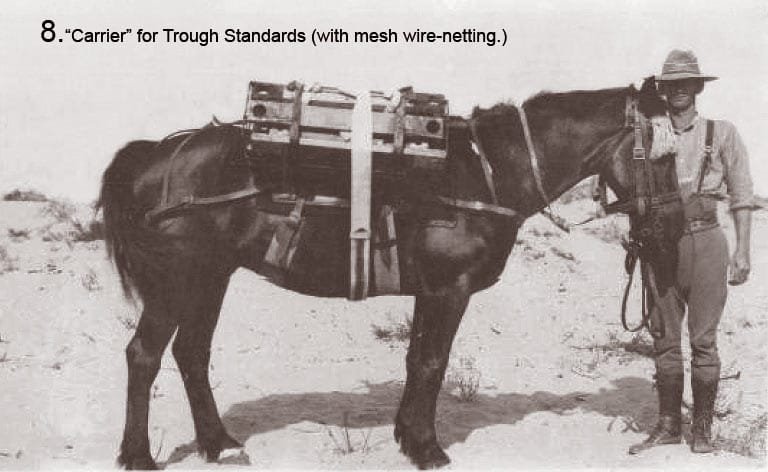
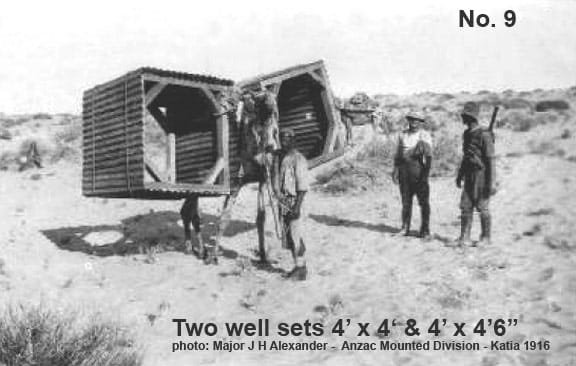
Authors Note -While this may be a light weight construction, I would suggest that this is pushing it a bit as a load for the horse! I think it would have been better for the pack horses to have these collapsed into more manageable loads! 
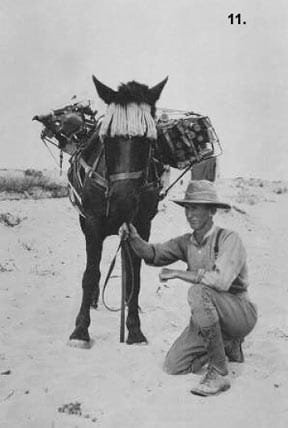
The key is to get the load balanced. Having looked at all of these photos it does appear that all of the loads are fitted to the standard General Service Pack Saddle with only slight additional modifications such as additional straps and extra surcingles. Also the loads – with the exception of the Well Set load – all look very manageable and balanced.
While his developments and creation were put in place for the Sinai campaigns in 1916, they would proved invaluable for the campaigns at Gaza and Beersheba in 1917 and would become essential equipment of the Royal Engineer Field Troops attached to all of the Mounted units of the Egyptian Expeditionary Force.
Authors Note – I first came across Major Alexander RE and his work in 2016 when researching the work of the RE mounted Troops in the wider Middle East. I came across a New Zealand Website which gave the details of Maj Alexander’s background being of Irish and New Zealand extraction. The majority of the images of the pack horse loads are from that website, unfortunately the website no longer seems to be available as I would like to give credit to that site as it provided a big chunk of the information that I used in my original facebook post on this topic and provided the basis for this blog post.
If anyone knows if the New Zealand website has moved to a new address then please let me know as I would like to provide a link to it and to give it the credit for setting me off in the right direction with this research. Regards Will Mac
Remembrance Day at Maisieres
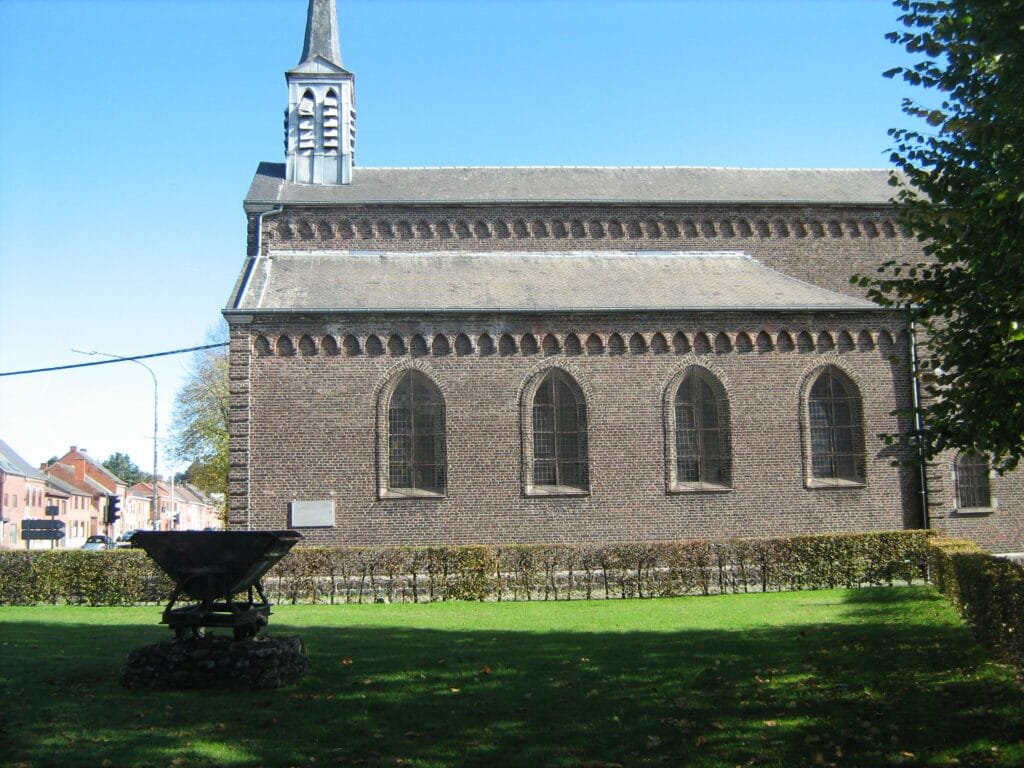
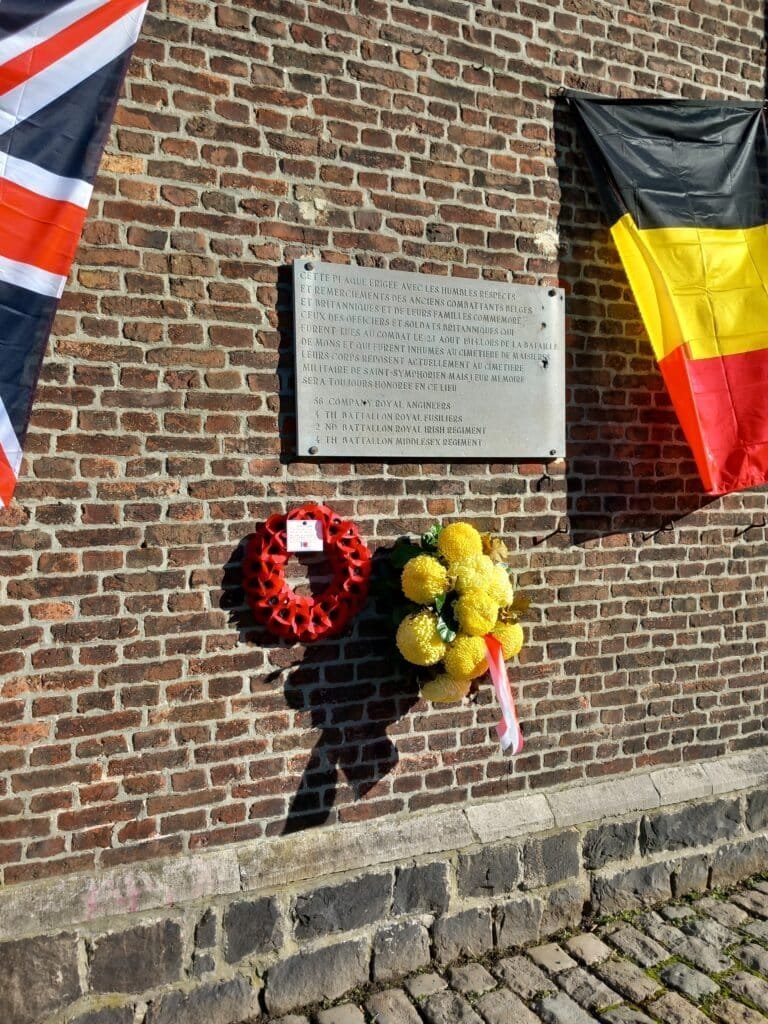
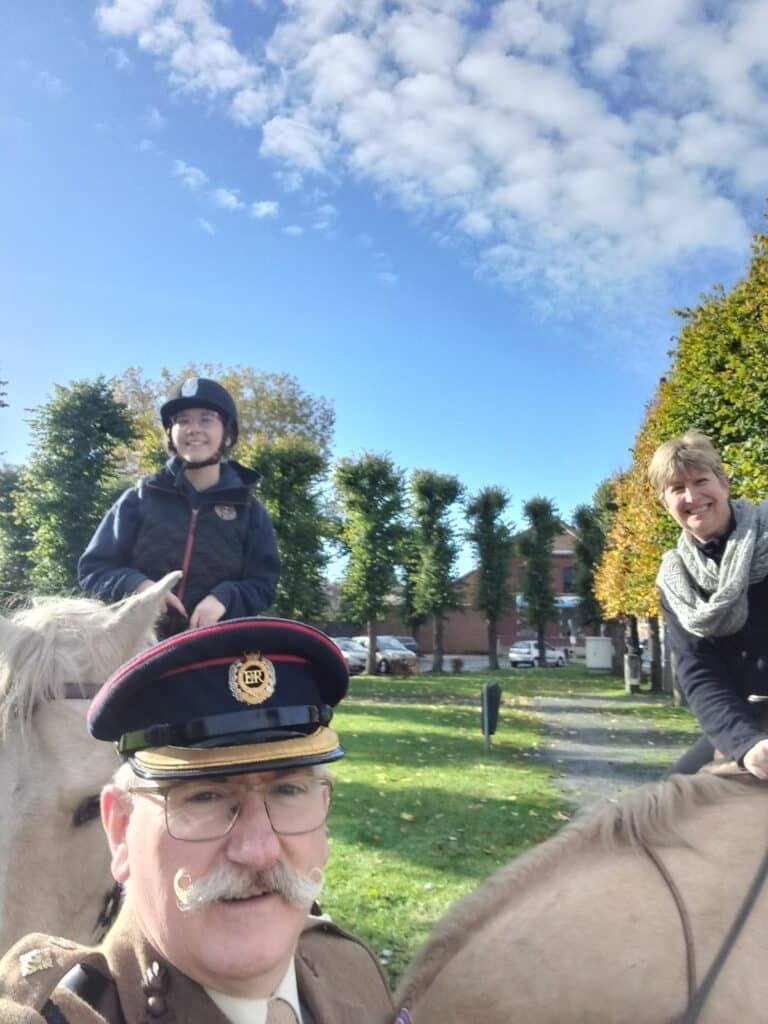
This morning I represented the British Forces at the Church at Maisieres at Mons. This is the local church to where I live out here in Belgium and I volunteer to lay the wreaths here due to the Royal Engineers connection of the village and the church.
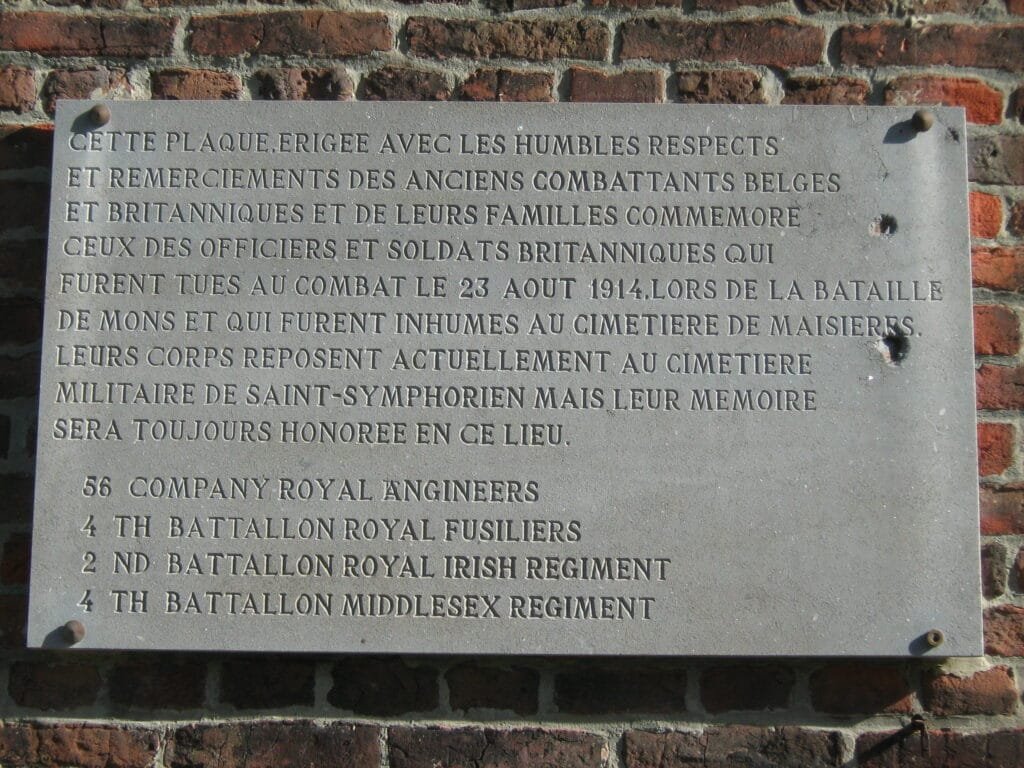
At the Church there is a memorial plaque that commemorates the British units that defended the section of the Nimy Canal on 23 August 1914.
56 Field Company Royal Engineers are named on the Plaque and as such I feel it is my responsibility to attend this location on behalf of SHAPE and the Corps.
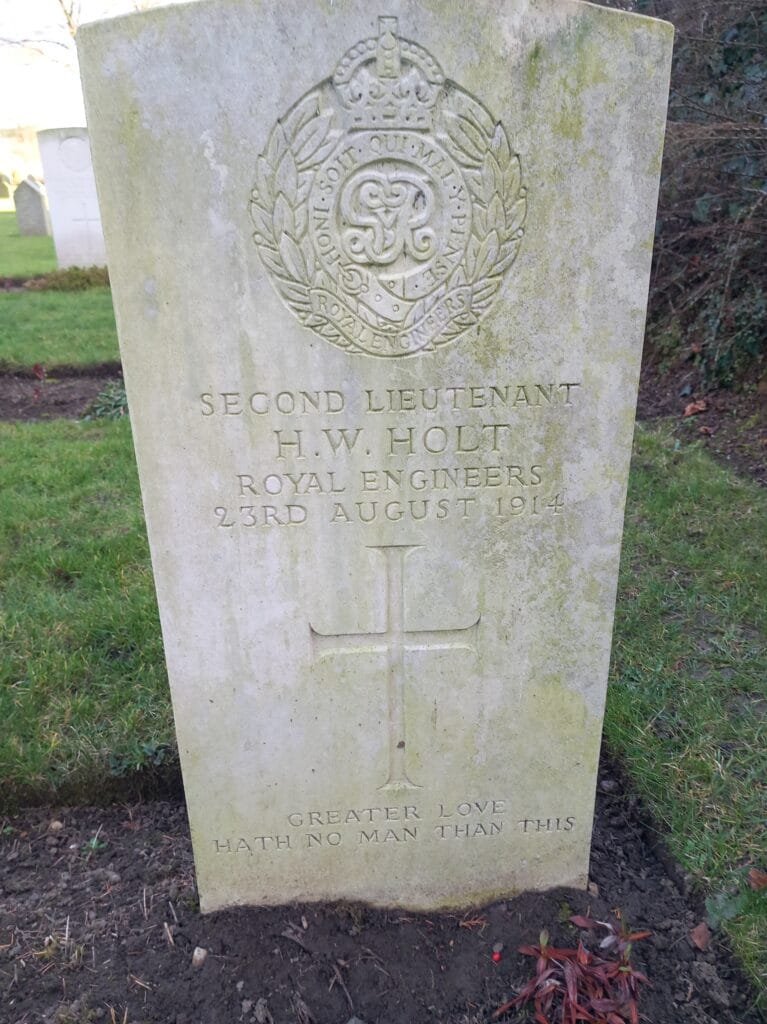
Why? well 56 Field Company RE were tasked with the demolition of the 4 bridges in this area and were the first RE unit to be engaged by the Germans, they also sustained the first Royal Engineer Casualty from enemy action of the Great War – 2Lt HW Holt RE.
Holt and the other dead from the Engineers, Royal Fusiliers, Royal Irish and the Middlesex Regiment were originally buried in Maisieres before being moved to the combined British and German cemetery at St Symphorien on the eastern side of Mons.

The thing that struck me was the passion that the locals have to remember those that fought in 1914-18.

With a wreath laid at the Church memorial we all moved up to the village war memorial for a small ceremony where the names on the memorial are read out and Wreaths are laid. The move up to and back from the village war memorial had us escorted by 2 Horses and riders. From all accounts this is a local tradition and possibly dates back to just after the Great War when there was a Belgian Cavalry unit based at the Barracks that now form part of SHAPE.
So with wreaths laid it was Duty done and respects paid, it was a honour to do this morning.
Some of the Men of Hartshorne on the Somme.
Having been told to take things at a slightly steadier pace, I decided to do some more research for a few more of the men that are named on the Hartshorne War Memorial.
While I accept I’m not born in the village it has been my home for the last 23 years and that of my better half since the late 70’s, and I have firm sense of belonging to the place. So each remembrance Sunday when back in the UK I have taken great pride in representing the Royal British Legion in the village and laid a wreath at the village war memorial.

One of the interesting things is that a villager produced a document called “In memory of the Men of Hartshorne who fell in the Great War”.
I’ve been using this document to search for where each of the men are either buried or where they are commemorated. During my posting to Mons, I’m aiming to try and visit as many as I can of those that are in Belgium and in France.
This weekend has seen me look to locate those that are in the Somme area. This covers 4 of the men listed on the village war memorial, these are:
- Private James Blood, 10th Battalion Notts and Derby Regiment.
- Lance Sergeant Thomas King, 4th Battalion Grenadier Guards.
- Lance Corporal Sidney Walker, 2nd Battalion Royal Irish Regiment.
- Lance Corporal John Walton, 1st Battalion North Staffordshire Regiment.
Of these 4 men, 3 have no known grave and are commemorated on the Thiepval Memorial.
The first is James Blood.
He is located on Pier 10 of the memorial and face “C” of the pier. Each pier and face of the memorial is coded to help locate the names, the numbers are at the base of the pier. As shown below:
The memorial has the names of all of the fallen with no known grave listed by Regiments, so by looking for the Unit it is then a case of looking for the rank and then the names are listed alphabetically.
For those visitors who are not of a military background the Regiments appear across the memorial by Regimental precedence, not in alphabetical order.
The next one that I’ll deal with is LCpl John Walton of the 1st Bn North Staffordshire Regiment. His name is located on the 14th Pier/ Piller and on Face B. His name appear just above the pier marker.
L/Sgt Thomas King of the 4th Bn Grenadier Guards is slightly different from the other 2 soldiers, in the fact that his name is not listed with in the Grenadier Guards roll, he is located separately as an addendum, which indicates that he was added to the list of the missing after the main list had been completed and carved. His name is located on the outside of the memorial on Pier 4 face C.
The last Man of Hartshorne, LCpl Sidney Walker of 2nd Bn Royal Irish Regiment, that I visited today does have a grave and he is located at the Caterpiller Valley Cemetery, which is just outside the village of Longueval. He is located in section 11 of the Cemetery, row E and grave 21.
Its been an interesting day tracking down these 4 names and their memorials.
The aim is to get photos or visit as many of these villagers graves or memorials as I can during my time in Belgium. I’ve already done a visit to Ypres and got a few and also a visit to Arras recently picked up a few more. I plan to create a blog post for each group that I track down.
1890 UP Saddle Refurbishment update
Over the last couple of months there has been a bit of work done on the refurbishment of the 1890 Universal Pattern Saddle.
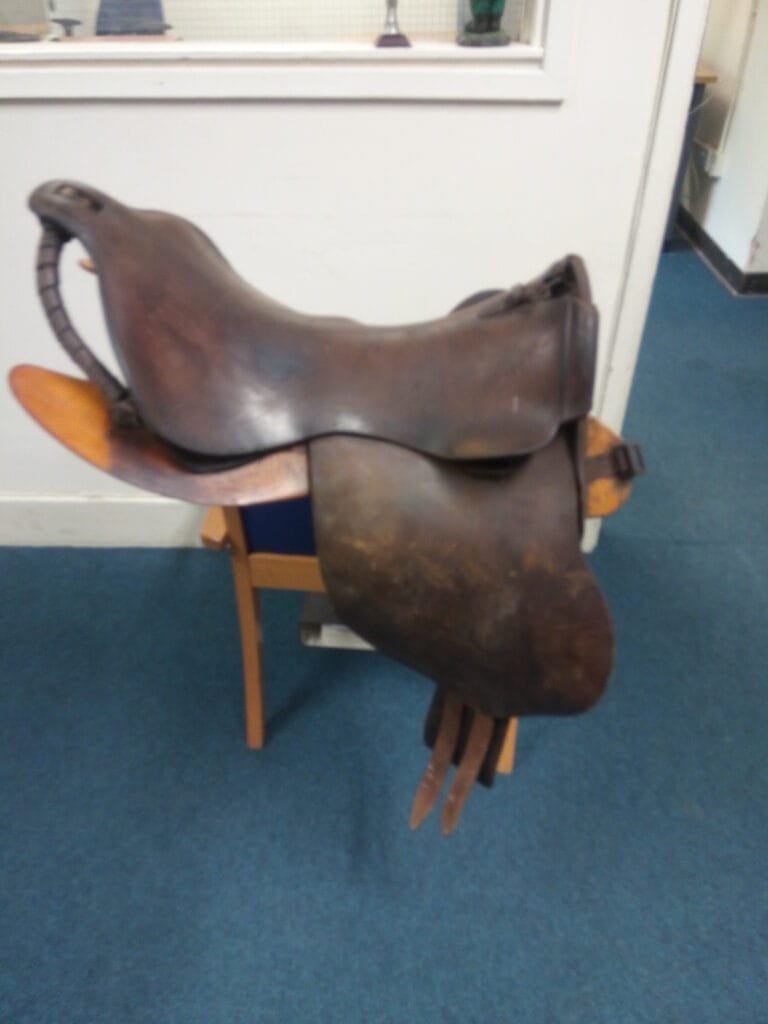
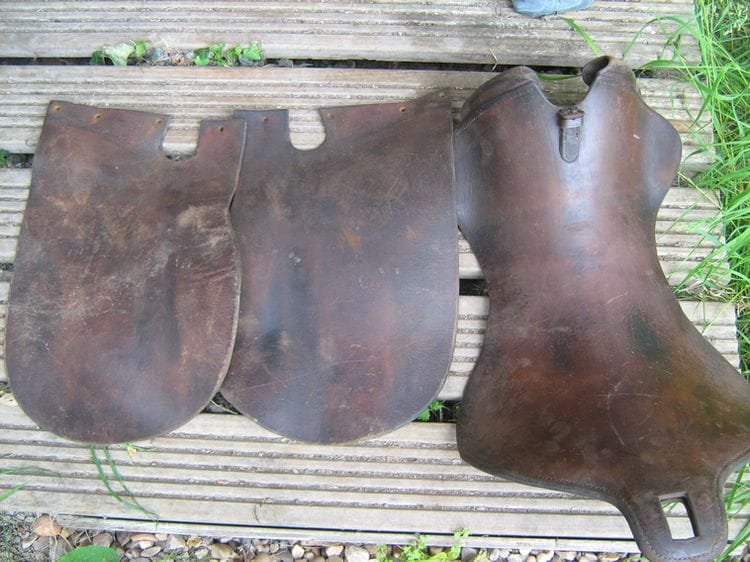
the 1890 saddle just after I had picked it up Now I have to admit the main reason for the increase in activity has been two fold. The first was having been contacted by Gerard Hogan, a Military Saddler from Australia who had spotted a few “quirks” with my saddle that he was interested in getting some more details on. The other fact was that I needed something to be a focus away from the day job.
The result was that I did some work with Gerard to supply him details, photos and in some cases traces/ templates of some of the particular parts of the saddle to help with his research of the 1890 UP. That has really increased my knowledge about the saddle and how rare it is.
With its rareity in mind I’m aiming to refurbish it but with keeping as much of the original parts as I can.
So where are we at the moment?
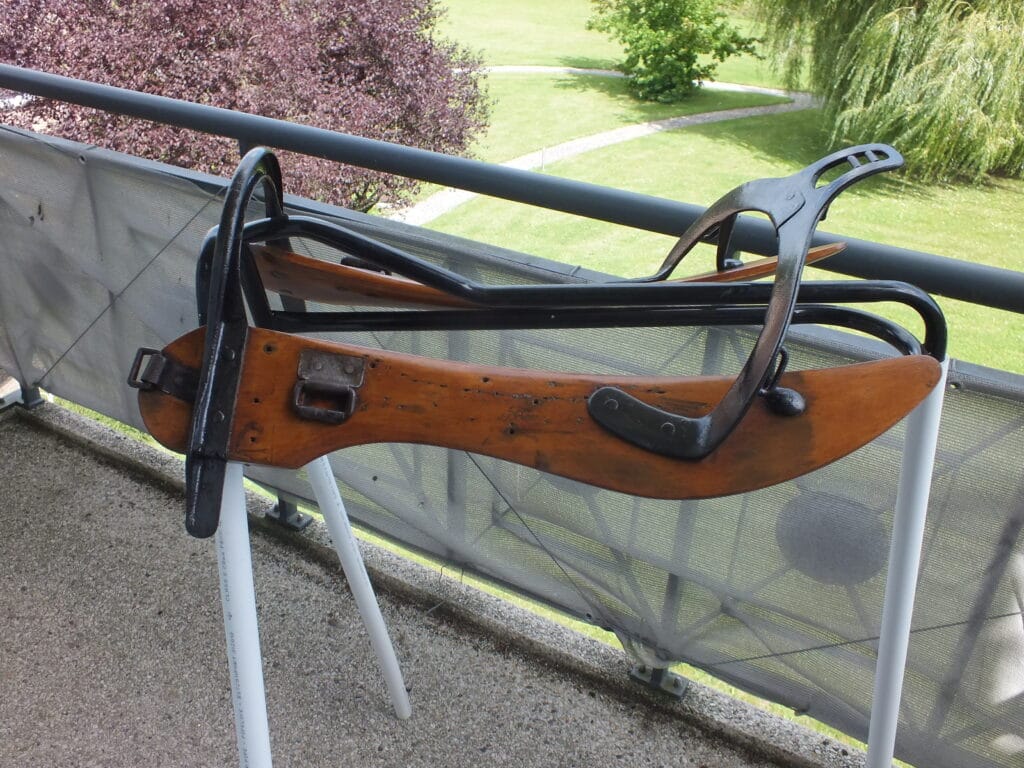
The Saddle Tree (Arches and Timber boards/ fans) have been cleaned up and the arches have been repainted with metal paint and the boards have been cleaned, lightly sanded and given a couple of coats of varish.
All the leather work has been cleaned and scrubbed. With the advice of Gerard I used sunlight soap to help lift the 120 years (ish) worth of crud off the leather work, that did a cracking job of cleaning the leather but it took a blood age to clean the sink afterwards – Just as well that I did it out here in Mons, rather than at home where the GOC UKLF (AKA the Long Haired General) would have killed me!
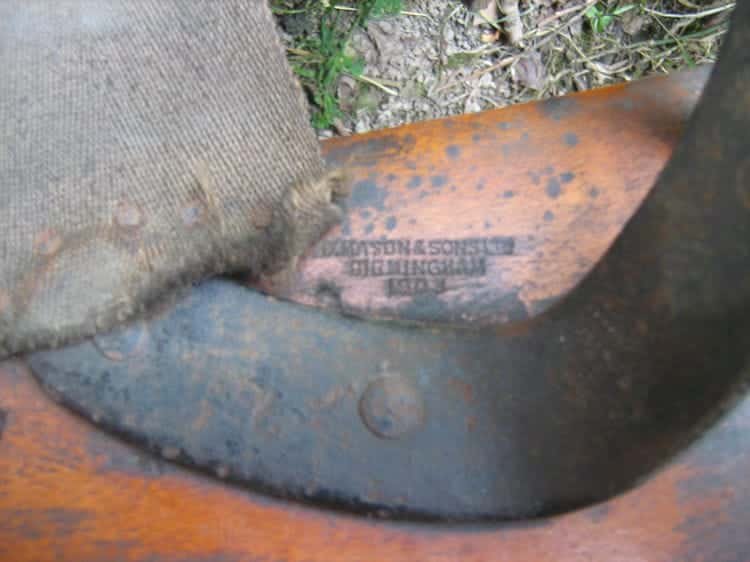
One of the finds from the scrubbing clean was that there was a makers stamp in the middle of the Seat Leather. Showing D Mason & Son Ltd, Birmingham, 1902. With finding this set of markings the saddle now has 3 sets of period marks – 1901 for the Arches, 1902 for the Seat and 1903 for the wooden boards.

All of the leather was allowed to dry and then has a good coating of Leather balsam to get some life back into it. with that done all of the smooth leather was given several coats of Dark Tan boot polish and the rough sides given a good covering of brown boot dubbin.
With some of the life now back in the leather it was time to start doing a few of the smaller repairs, such as replacing some of the damaged/ failed stitching. this was mainly on the front flaps of the seat. One of which had to be completely removed and restitched back on.
There are still parts of the saddle leather work that needs repair, in particular is the Y Girth straps. As part of the chat with Gerard it appears that the shape of the leather panel indicates that these are a second edition version and quite rare, so the plan is to replace the damange leather strap only and to keep the rest as original as possible, so brass rivets have been ordered and a local leather worker is making me a new replacement strap. (I suspect that they have all been replaced at some point in the past already by the look of them – which is not unreasonable as the UP Saddles are designed to be fixed in this way ).
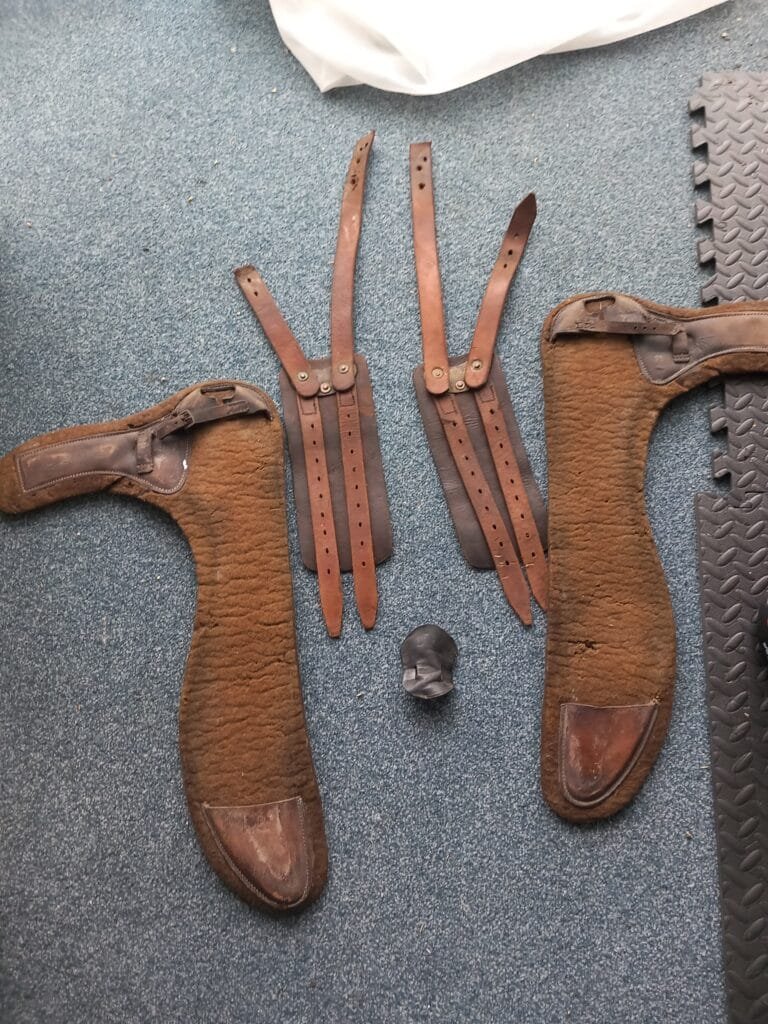
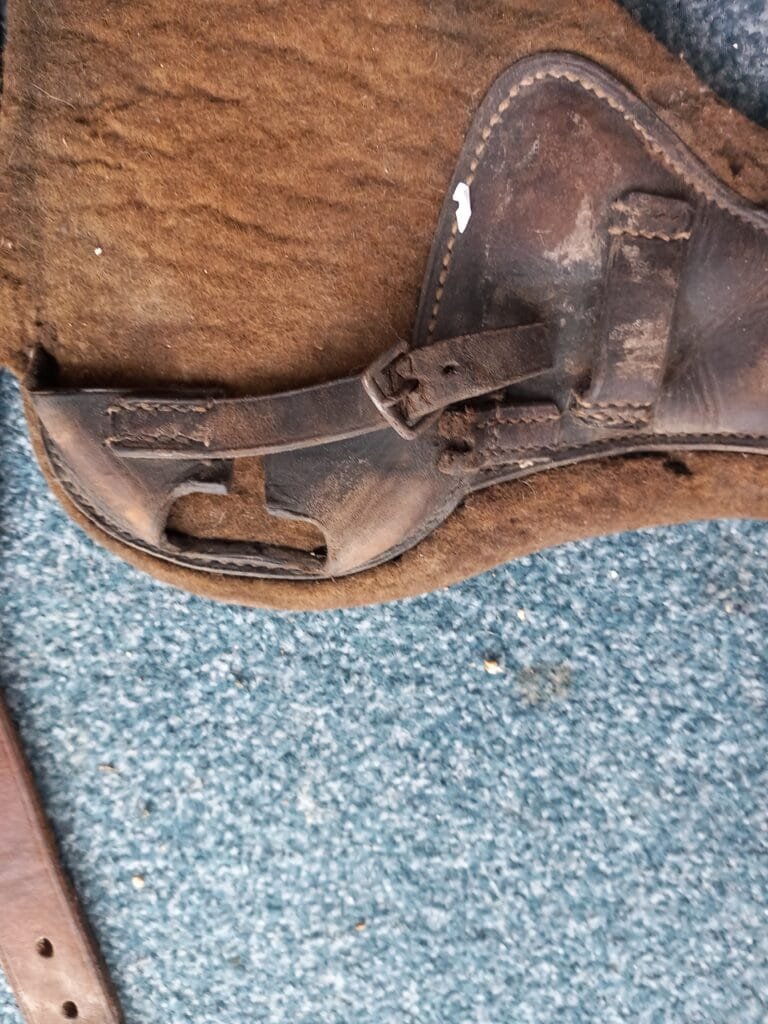
The next phase of the refurbishment is to put new webbing straps onto the tree to support the seat. I’m in the process of ordering new screws for the refitting of the Y straps and the Sweat flaps and I need to get replacement short straps to replace the broken ones on both of the felts and also on the felt numnah.
Damaged leatherwork on the felts So I’ve made a start on the refurbishment and there is still a good bit to go at the moment but it is something that I don’t want to rush too much as I want to get the saddle back to a condition that I can use it for riding and not just as a show piece.
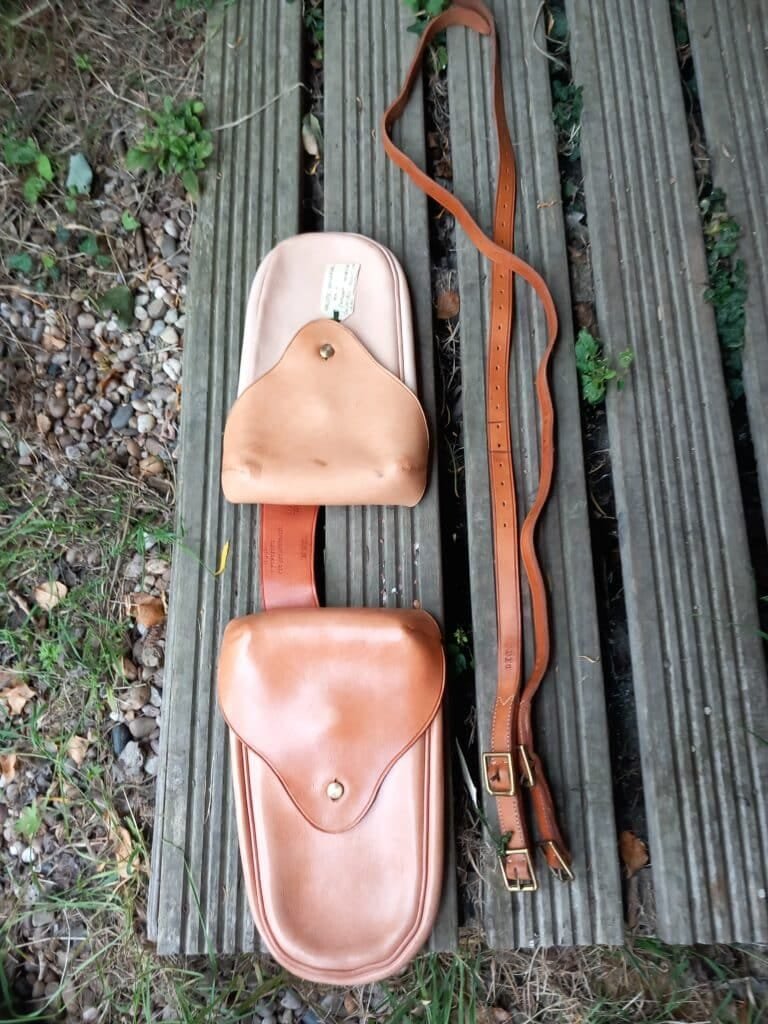
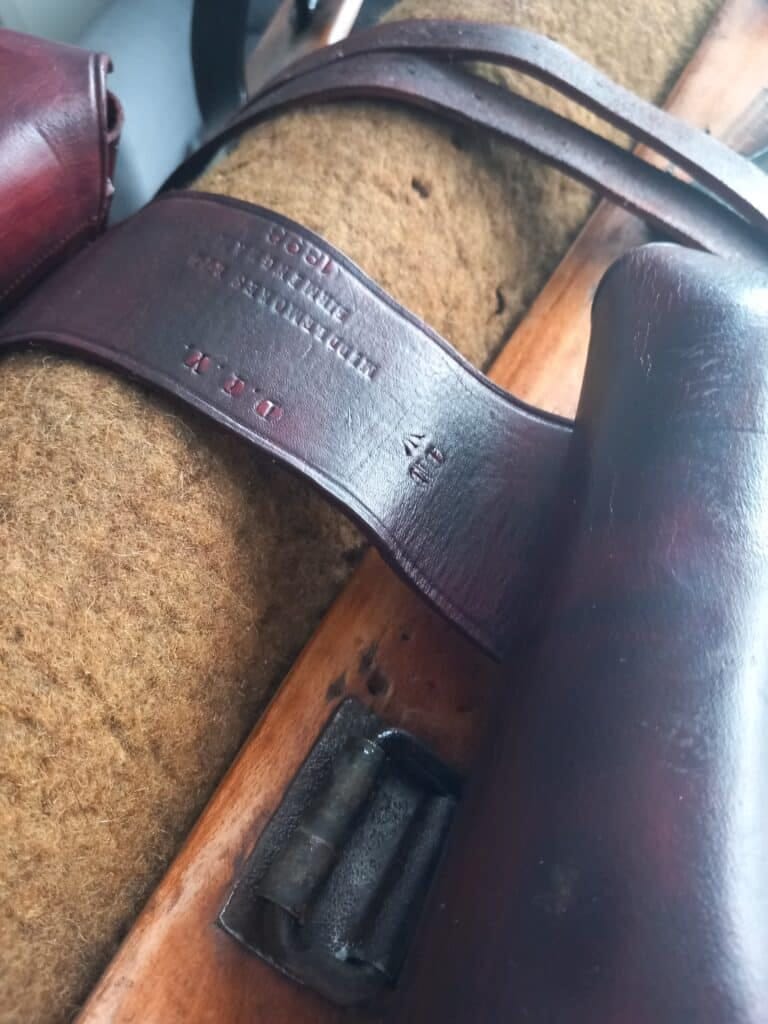
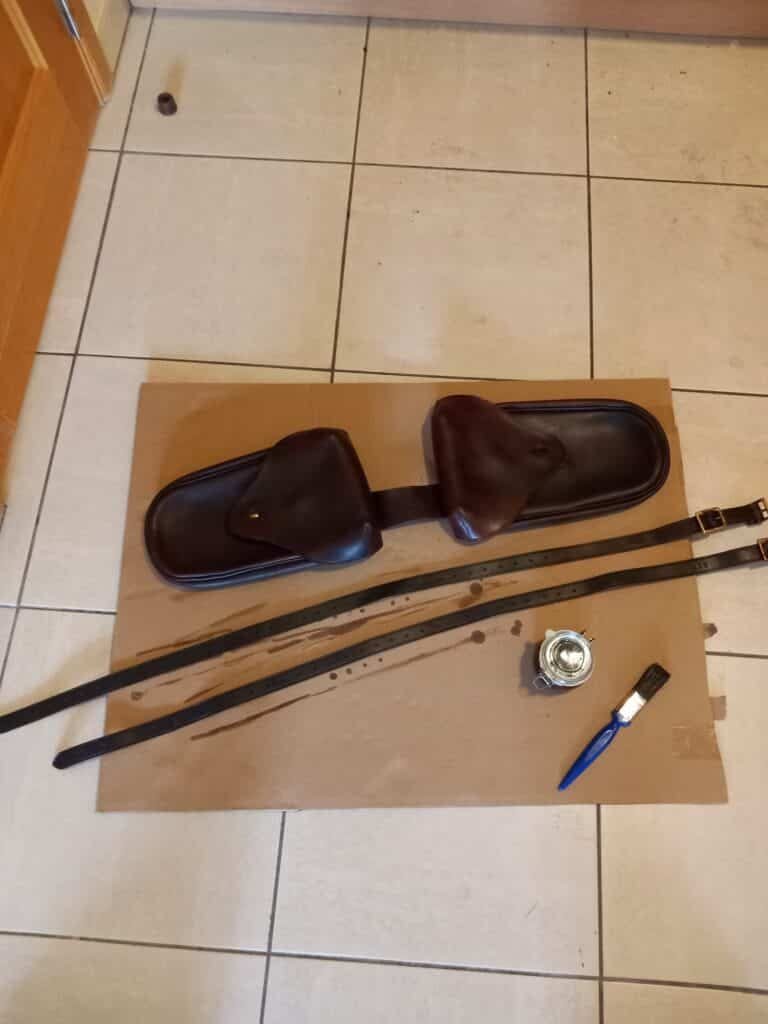
The other item that has now been added for the saddle is that Gerard made a set of period appropriate Saddle Wallets and straps to go with the 1890 UP when it is complete.
Gerard also added some Derbyshire Imperial Yeomanry markings on the wallets and straps as he knew that I intended to set the saddle up as a Yeomanry Saddle and the Derbyshire Yeomanry was my local mounted unit, a really nice touch and very appreciated.
I wanted the wallets to be darker in colour to match the saddle so a dark brown/ havanna brown leather dye was applied. and once dry the inside of the wallets was given a bit of nourishment with dubbin and the exterior was given several coats of dark tan boot polish and good going over with the boot brushes to buff them up.
I really must thank Gerard Hogan for his excellent work on the wallets and also his help and advice with the refurbishment of the saddle. I still have a quite a bit to do but things are moving now and I can see it starting to come together.
The next phase of work will be over the autumn period and hopefully I’ll have a completed project by Christmas. If you have any comments or thoughts on the work so far then please let me know via comments or via the contact page.
Historians, Battlefield Guides and Reenactors
I follow quite a few historians, Battlefield Guides and Reenactors on Twitter, Youtube and a few other platforms. Why? well I like history, I like researching battles and then walking (and Riding) the ground, often giving a talk on the battle to those that I’m with, and I also do Living History/ Reenacting. So whats the issue?
Well…….
There are times when everyone hates each other or condemns each other but particularly at this time of year, the events season, I see quite a lot of focus on the the dislike and condemnation of the Reenactors and Living Historians.
“Its that time of year when fat old blokes appear dressed up as aged paras….“
“there is nothing I hate more that seeing fat middle aged men pretending to be Richard Sharpe….“
and so on and so on.
As a living Historian I’ve been on the end of this flak and I’ve also been part of the reason for the flak. But I’ve also seen the hypocrisy and double standards of the Historians and battlefield guides. So this is going to be a tale of how we all have a problem, how we can look to prevent the problem and how we all fit together and can work together.
Before I go any further – There are people out there that that already do this and are bloody good at it and it makes for really good events, talks and lectures. We just need to be:
- Honest with ourselves.
- Open minded to learning
- Open minded to learning from others from the other groupings.
- Prepared to work together
- Understanding that just because you are in one of the groupings (Historian, Battlefield Guide or Reenactor), don’t think that there aren’t people from your grouping in some of the other Groups.
So what do I mean by some of these observations? Well lets have a chat.
I got into the Living History by accident but once in I really enjoyed it and for me the ability to learn history, demonstrate it and then engage with the public is the bit that pushed/ pulled me further into it.
So lets get things straight to start with I am the middle aged chubby bloke that likes to dress up (Steady now…….!) in historical uniforms. I’m 52 and stocky in build, I am not going to cut the mustard as a 1918 Royal Engineer Sapper aged about 21. However I have worked out that I can pass as a Warrant Officer or as a Major, and that works for portraying Sappers and Infantry. I have also kitted myself out as a Sergeant of the 5th Seaforths but not of an Infantry Company but of the Transport Section – why? because from images of the time there is a good spread of older blokes in that type of unit.
Its an early lesson that I learned from some reenacting groups – Do you look like you belong dressed the way you are? The other bit of my rationale is that I have been a Warrant Officer and an Officer, now I agree that doesn’t mean that I can carry it off as a period Officer or Warrant Officer/ SNCO but it gives me a basis for the role but I’ve had to dig in and learn the specifics of the role in the period portrayed.
Mistakes that I have made as a Living Historian that could be or are spotted a mile away by others in the Reenacting world:
- wearing modern glasses. I’m a speccie git and I need my specticals all of the time (I’m not blind….) but for some of my early events I just wore my modern glasses, while they were plain metal frames I was very aware that they were not period appropriate. I now have period appropriate glasses for the Victorian & Great War period and also for the 1940s period. You get them from companies such as Dead Man’s Spex (https://www.deadmensspex.com/)- A very good company and great to deal with!
- Using Modern Drill – this is a common issue with British Soldiers that start doing reenacting. The lifting your knee to parallel to the ground and stamping your feet is a post ww2 thing. And I’ve been caught out by it – yes the non-drillie sapper was caught out doing modern drill. WW1 drill is more akin to Royal Navy drill – sliding the foot in, less formality to it. The good reenacting groups do a lot of training to get their group and individuals to look the part and to break the habit for the serving soldiers in their ranks so that the foot drill is appropriate of the period.
- Missing the small details – I have an officers SD Cap that dates from the 1940/ early 50s. Fairly well battered and was a good starter cap to use with WW1, when I picked it up it had modern stay bright ER2 side buttons on it. It was only after a couple of events that I clocked it and changed them for brass period buttons (I’ve also replaced it now with 2 period specific caps). Which was lucky as at the next event that I attended I was checked over and the individual was looking particularly for this type of thing.
- Riding Boots – Riding boots are not cheap and most people have black riding boots. Luckily when I decided to invest in a set of long riding boots I went for brown ones which was not a bad idea for when I was doing competitive riding but for reenacting they just weren’t right. It wasn’t until I did the Warhorse 14 Event where we were asked to bring our own long riding boots that I realised how much they they were not appropriate. The style and cut of them was just not right. so over time I have managed to invest in a couple of pairs of boots. These haven’t been cheap, but they are really good to ride in and between them I can cover all of the Great war period.
- There are other faux pas but as I’ve realised them or they have been pointed out they have been corrected or removed.
The so-what of this is that my journey to become better and more accurate has taken time, effort, research and some bits of embarrassment and some wrong turns, added to which it also costs. Next to no one can afford to come into this hobby and buy a full set of kit in one hit that is perfect. You tend to start with the basics and build from there or get loaned some kit to get you through your first season of events. Once you know that you enjoy it then you should start the real investment of time, effort, research and money.
So this is why you tend to have the middle aged individual with a bit more cash dominating the field.
A lot of people from the historian side of things are keen to point out the Fat SS bloke or a group of “Living History” bods at an event that just look shite while wearing all sorts of uniform, kit and equipment. Here is my take on things –
The WW2 German and SS reenactors get a shit load of flak from the historian community and others, they are an easy target to critise and often used as a focal point to have a go at the wider reenacting community. They are seen as right wing sympathisers, or Nazis in plan sight etc. Well while a very small number may be, the vast majority are not. Theres a whole wider discussion to be had rather than roll out a blanket – THEY SHOULD BE BANNED! – I don’t agree with that. There are some very good living history groups that do WW2 German Forces, they do it in an educational way and they do excellent displays. if you ban them then you lose an important part of history, you only see one side of the story and that means that parts of the story go missing or are glossed over or simply disappear. My view is that incomplete or unbalanced history is not good history and wrong lessons can be taken from that – this is a far bigger discussion for a later blog post perhaps.
I’ve seen arguments where these uniforms should only been seen in Museums. Well guess what?Museums occasionally get their uniform and equipment displays wrong and they often don’t like being corrected by the reenacting community! (I’m aware of 2 museums at least that have incorrect 1902 UP saddle and Tack set ups on display which are wrong and the equipment they display is not period appropriate for the display! In both cases the displays were done by the museum staff and historians).
As with all living history events and groups, if you get the right people, with the right reputation for doing the displays and talks right, and you will have the ability to understand the soldier’s perspective, from both sides of the conflict.
Another important thing where reenactors get criticised is where they just look like a bag of shite and don’t look appropriate. Reenacting groups will often look for funding or costs to attend an event, and often that really expensive event that you paid a fortune to attend will look to cut costs and in doing so they will book groups that are cheaper or to cut the costs further by using in-house volunteers.
Now some groups are are cheap because they are starting out and need the money to cover travel costs or to fund then next part of their development. Established groups need to cover their travel costs, public liabilities insurances, repair and maintenance of their equipment etc, that means they are not cheap but you do get a very good display and experience, these are groups such as The Warwicks 1914-1918 Group or the 16th Lancers Group.
Some events decide that they just don’t want to pay out for these groups so they either get some of their volunteers to dress up in uniforms or in a couple of cases they have hire some actors and provided some kit for them to wear. From a Reenactor point of view this is the worst of the all possible worlds, as people will look at these individuals and think “feck me they look fecking rubbish!” and they are right but trying to make people realise they are not reenactors is bloody impossible, They have been trotted out by an event that is too cheapskate to allocate some funds to get a half decent group booked, and regularly we see photos from these type of events being trotted out by Historians and Battlefield guides as the evidence of why reenactors are shite!
To the event organisers, do yourself a favour, if you can’t afford or won’t pay for a decent Living History or Reenacting Group then either don’t add a dressed up element or speak to a Reenacting group and ask if they can provide a small contingent to do a talk or smaller display. All that happens is the reenactors get a bad reputation and the event gets black listed by reenacting groups for the future.
To the Historians out there I have listened to a number of you publicly complain that you are invited to speak at events with an expectation is that you will not be paid – well it is the same thing for the Reenactors.
I’ve worked with historians and on Battlefield Studies/ Staff Rides. Some of these have been really good and some have been shockingly bad. Here is my take on things (this is my opinion and my experience. so you can take it or leave it).
On an Army Staff ride event in France and we are stood on a battlefield. The Historian steps up and gave a really good brief on the Context to the battle, the formations involved and the Generals and the factors that affect the battle to this point. At this point he handed over to the Battlefield Guide who then talks everyone through the battlefield that we were stood on and pointed out all of the relevant features of the battlefield that could be seen and what happened as the battle proceed. At this point he handed over to us the Living History team for us to talk though the kit and equipment that the British, French and German infantrymen would have worn and carried for this particular battle, we then handed back to the historian who then talked through the results and consequences of this particular battle! Job done, good partnership!
On the same staff ride I then had the problem of a different Historian talking through a Battle, in really Big Hand terms and skimming over the particular details of the actual events and location that we are stood on. And then used me as the equivalent of a tailors dummy to talk about my kit and equipment which he proceeded to get completely wrong. Which is really bloody annoying! This well respected individual and published author, while comfortable with the Strategic and operational aspects of the events, was bloody clueless on the tactics and fighting on the site and the particular loads carried by a British Infantryman on the day!
I also attended Battlefield study provided by a commercial company, 5 days around the Ypres battlefields with a focus on 3rd Ypres. By Day 3 it was clear that our guide was really good at the tactical battles of each of the sites we visited, he could walk us through each site and give us great detail about the events, the bravery of the soldiers and wins and losses at each point of the battle. What was lacking was the piece that linked each of these battles together what made these battles part of the Third Ypres Offensive? The operational and strategic aspects were lost or missing, why is that important? Well the audience was Warrant Officers, Majors and a couple of Lt Colonels, and getting to know the bigger picture was probably a bit more important. The follow up letter to the Company Head office expressed the disappointment of missing the key component of what had been asked for when the battlefield study was booked! To resolve this we ended up asking for a War Studies academic from Sandhurst to come and spend a day with us, who quite successfully managed to stitch everything together for us.
Another observation that I have is the hypocrisy of some historians. The number of times that I have seen some historians criticise reenactors and living historians and later appear either in badly fitted and incorrectly worn kit themselves as part of a talk that they are giving or where they give a lecture or presentation and use reenactors as part of that event.
Guys, if you don’t like us then stay the hell away from us and don’t try and jazz up your presentation by slinging some kit on. If you are going to wear kit and equipment then get a hair cut, make sure you are wearing the right kit for the period you are presenting on and make sure you know your stuff about what you have on. If you want to do this then come and talk to us, embrace it and make the effort. The reenacting community wants to help and wants to engage, thats what we do this dressing up milarky for. A really good example of this was on the Ride to High Wood in 2016 we were joined by a professional artist who had been commissioned to produce a piece of art of the battle. He could ride and as such was kitted out as a 7th Dragoon and had spent time prior to the event learning to ride in a WW1 Saddle and equipment and then joined us for the 2 days to ride the ground of the 14th July 1916. He wanted to get an understanding of how the uniform, equipment and saddlery was worn and used prior to starting his artwork.
I’ll leave you with a last anecdote. I was part of a group of living history members doing a set of static WW1 displays at Sandhurst showing the support and logistics involved in the later parts of the Great War. These displays were part of the pre-deployment presentations for the Army Staff Ride in 1918. Those attending the staff ride were broken down into smaller groups and moved around each of the stand and got briefs and the chance to ask questions and handle the kit and equipment. Each of the groups had a mix of nationalities and also civilians Historians and Academics. with one of the groups I noticed most of the academics were not particularly engaged with the displays but with one group one of the academics was really interested, lots of questions, keen to get his hands on the kit and really engaged with what we had on display.
This acedemic later came back to have a chat with my mate and myself. He was really fascinated by the differences in our uniform but by the fact that we were both Royal Engineers. We explained that I was kitted out for a soldier with the Field Squadrons and my younger counterpart was kitted out for a Field Company Sapper and we ran through the differences and similarities for him. He explained that as a Historian he knew about the activities of the Royal Engineers and the wide functions of the different units but to actually see and understand the difference in kit and equipment was something that just wasn’t part of what he dealt with. We had a good discussion and by then end of it had agreed that to get the full picture there is a need and a place to have historians, Battlefield guides and Reenactors working together. I regularly see this Historian on TV and I’m always impressed by him, the fact that he was open to ask questions and engage has probably helped in my opinion of him.
In summary – there are good, bad and middling Reenactors, Battlefield Guides and Historians. The vast majority of reenactors and Living History people are passionate about their area of history and strive to get things right or as near as damn it. Quite a few of the living history and reenacting community are also Battlefield Guides and or Historians so give them credit.
Yes we are a older bunch but we do aim to get younger people engaged and to support them into the community and into groups.
Not everyone that you see in photos are reenactors or living historians, some events are just too tight to pay or invite good quality groups to their events. So sometimes we are tarred with the “Bad” brush due to the poor efforts of event volunteers and actors.
It can be hard to build a reputation as a reenacting group and often that takes attending smaller events and just not quite getting it right to allow them to refine, adjust and correct things, but don’t be too critical because some of these groups have to go through the pain of “not being 100% right” so that they can correct themselves.
And to the Historians who like having a go at criticising some of the reenacting groups, be prepared to eat a bit of humble pie if you suddenly find yourself needing some reenactors for your next book launch or your next history talk, and especially if you find yourself looking like a bag of shite tied in the middle with a 37 pattern web belt!
Lets all play nice and work hard together to give the public and audiences some good quality history events. And most of all lets learn from each other!
The Officers Field Mess Tin Set
So yesterday I posted on Twitter about a project that I’ve had for a while and I’ve finally managed to make time to clean it up and it’s ready for display and possibly for use. I’m going to go through it step by step so bear with me and let me know what you think.
This an Officers private purchase mess tin. It has a registered pattern number that dates between 10 Jul 1914 and 24 Nov 1914. Now that doesn’t mean that it is a Great War item but it mean the design was registered at this point in time and is period appropriate.
Inside the cotton cover you can see the mess tin set. The cover is held in place with a plain leather strap, which isn’t in too bad a condition. The cover also closes with a small light push stud.
The set is formed with a deep pan and a lid that will act as a frying pan. Take the lid off and you can see a small kettle, a handle for both the Pan and Frying pan.
Underneath the kettle is an aluminium plate. Everything sits together very nicely in pot.
Take the lid of the kettle and you have a cup and some lose items. While the cup looks like it has a lid this isn’t the case.
The cup contains these 2 items.
it’s a bit of an odd one to work out what they are until you realise that one of the items is actually upside down.
What we have is a cooker and a small fuel can. My gut feeling is that this may well be a mentholated spirits burner, its about the same size as my old tranga cooker that I would use for wild camping.
Now the 3 arms are added and hey presto a small cooker ready to go for making a brew or doing a bit of bacon.
The last piece is to finish the set and that is to add the handle to the cup.
Slot in the bottom of the handle into the bottom bracket and then press down and slot the top into the top bracket. Job done!
And just to show the pan handle in use.
Overall a very nice period mess set for the Officer in the Field. I just need to keep an eye out for a campaign Knife Fork Spoon Set and then job done. It fits nicely with my Officer’s Field Kit, and will live in my musette bag with my whisky flask, and other essentials.
My take on Beards in the Army

As many of you know I sport a fairly large Tashe and in most units that I have worked with over the years my facial hair is better known that I am:
“Have you seen the Garrison Engineer?”
“Who?”
“Bloke with the big Moustache?”
“Oh him, yes, he’s over at the HQ Building…..”
In recent years there has been much debate in the British Military about if we should allow beards and how that will increase recruitment and it will make the British military better.
Will it? is it the simple solution that will solve everything? is it the panacea that we need to fix everything?
No it isn’t, lets not kid ourselves there are far bigger and deeper problems than just letting the military stop shaving and becoming more hipster. I’m going to throw some thoughts and observations out there, they are my views and as such you can agree or disagree that’s your choice but just hear me out. The one argument that will not appear is the “Respirator” issue – I don’t care on that one and that can be discussed by others to their hearts content.
So lets start with my facial hair background. I’ve been in the Sappers for 36 years and I have had facial hair of various forms for 28 years of my career. There has been the occasional short breaks in that period but normally no greater than 4 months as the maximum. During my facial hair career I have done the following:
- Shaved my tashe off once due to operational necessity. (Norther Ireland)
- Shaved my tashe off once as I was required (ordered)to give an order for others to shave off their “tour” tashes and I could not give that order when I retained my tashe (on the grounds that my tashe was a “tour” tashe from 15 years prior). Our clean shaven status lasted about 10 days and we started growing facial hair again.
- Shaved my tashe off due to a misconceived understanding of an order about the removal of “Movember Tashes”, this resulted in myself and another GE removing our long worn Facial hair and there truely becoming 2 x “Grumpy Engineers” knocking about the unit. This also resulted in the 2 Garrison Engineers receiving orders from higher formations (Our Wives) that we were not to return from Tour without our moustaches.
My wife has always liked me having a tashe, even to the point that she saw a photo of me from a Falklands Tour in 98 where I was sporting something that would not have been out of place in 1982 Goose Green with her comment of “that really suits you, can you grow it like that?” .

Wedding day to the GOC UKLF – Please note we are the same height, I’m just stood on a step for the photo! My unaccompanied posting to Cyprus for 2 years saw me some what rebel and go back to a time when I joined the army and quite a lot of SNCOs had tashes and facial hair “buggeryboards” on the cheeks, so my tashe became some what bigger and more substantial.

Cyprus 2005-7, the development of the enlarged tashe of colonial proportions. 
Wearing a serious look of concentration and a large tashe in a show jumping competition. Now all of this is all very well but I want to add an important note, that will be relevant in a short while. My very first attempt to grow a tashe was on tour in 1990 as a young Sapper. It took 6 weeks to be noticed by anyone and it was clear that I was not ready to have facial hair.

A young tasheless pup lurking in the hedges and ditches of Northern Ireland So back to my thoughts on the facial hair. when I joined in 1987 most of my Training Sgts and Trade Sgts all had tashes, they were long in the tooth experienced blokes who had been to Northern Ireland, The Falklands War or had spent their time in Germany waiting for the 3rd Shock Army to roll over the inner German Border. Not many of the Officers had tashes and if they did they tended to be the Late Entry Officers, not the blue bloods. Facial hair in the Army of that time was a fairly common sight.
Years later I chatted with a OC that I worked with closely and asked why most officers didn’t wear tashes and he put it down to being traumatised by Walrus Tashed Colour Sgts and Sgt Majors while at Sandhurst. He may well have had a point!
The Moustache used to be compulsory in the British Army until the rescinding of Kings Regulation 1695 in 1916, this was brought about by General Macready. I used to have a problem with this chap until you dig into his history and his work in Ireland is a real insight, the fact that he hated having a moustache is something that we may need to just keep in the back of our mind when we look at the discussion about beards, they are not going to be everyone’s taste.
So the discussion is that we should allow beards, well I think that is a fair point and I don’t have a problem “having beards”. However (you knew there would be a however….) we (the Army) need to think this through, because the RAF clearly did not.
What do I mean by this. When the RAF changed the rules I was doing regular visits to Northwood for meetings and it was clear that most male RAF Officers below Wing Commander where now having a crack at growing beards, and my observation is that the Royal Navy and Army staff officers were clearly enjoying watching the really bad and poor efforts that were being cultivated by their light blue brethren . Some of the people working with these guys should have taken them to one side and said “you’ve had a couple of months of this, it just isn’t working, shave it off sunshine until you get a bit more testosterone…”
This is what happened with my very first effort, I just wasn’t ready for it, it would take 5 more years before I was “mature” enough to start growing facial hair.
My view on this is – just because you are allowed doesn’t mean that you should!
Next, I have not seen any beards in the RAF (with an exception that I will talk about in a moment) that have an element of style other than plain trimmed or clipper graded. These beards seem to lack body or style. Come on Guys, they gave you the opportunity to have a beard now damn well make an effort! At the moment it just looks like you have a beard because you can’t be arse to shave and now that you have it you can’t be arse to do some proper care and maintenance other than get it clippered.
If you are in the RAF and you have a beard then take a leaf out of the efforts done by your Sikh brethren, they show you how to wear a beard. I have chatted regularly with Sikhs to understand the meaning and customs of their facial hair and beards, and it is important to them and they have some bloody impressive sets of whiskers. So if you are going to have a beard then learn from these fine chaps, build up that tashe and get a curl in it, add body and substance to the beard itself and damn well invest in some beard products such as beard oil! I appreciate that it takes time but you need to invest time and effort into it. If you are going to have a beard then bloody well have a beard and be damned proud of it!

Warrant Officer Balbir Flora and 2 newly commissioned RAF Officers. Now what about the Army, well we have something the RAF doesn’t have. We have a history of beards in the British Army, the Victorian period was awash with the Facial Hair of the British Army expanding the Empire.

Sergeant Major Edwards 1858 In some parts it was the practicalities of Campaigning, the military fashion of the time or to match (and exceed) the facial hair of the Martial Tribes, Clans or Races that we fought against or fought along side. The moustaches and beards of the Army had a lot of meaning.
For me if we are going to allow beards then lets get back to the Historical links and the precedents, standards and styles. Don’t be distracted by the “hipster” style, lets give the beard and tashe that Regimental Identity, give it Tradition, give it a place in the Regiment History.
Make it the “The British Army Beard” not some facial fluff of a soy latte drinking twat with a fecking top knot! (if that upset you – why are you here on this blog? )
Right I’ll pin my colours to the mast, if beards come in prior to the end of my service then I’m going for this style as worn by Lord Roberts and Lord Chelmsford. Side boards extended, sweep round the jaw line and linking in with a full tashe with a waxed curl to it. Throat and chin clean shaven.


Now that facial accoutrements will need care and attention to grow, mature and maintain. My current tashe attracts attention and comments as I move around the multi nation environment as it is, this badger is going to knock my existing tashe for 6. I’d say that style may meet the requirements for a British Army Beard! what are your thoughts?
But regiments can make their own styles, we saw this in the Raj where different regiments would have a style. Did the Army follow the style of society or did society follow the style of the Army?
I know that the Army in India did it to match or be comparable with those that they had dealings with so that they would be on par with the society and the environment they were engaged with.


So my question is “are we, the Army, are going to allow Beards?” and if so what rules are going to be applied? We already have a set of rules for moustaches, how do we develop the rules for beards?
- Ask permission to grow?
- 28 days to grow enough to show clear intent and substance?
- Inspection by the CSM/ SSM at 21 Days to see that its going in the right direction.
- Well trimmed, uniformed length?
- what styles are forbidden? Braided Pagan?
- What styles are allowed – Jan Smuts Goatee perhaps?
- Beard oils and Tashe Wax?
- Regimental preferences perhaps?
- Does it come as an optional privilege of rank or time in unit?
I will say that what ever happens it should not be compulsory. Facial Hair comes and goes from fashion in society. And the wearer should at least commit to putting the effort in and not just use it as an excuse to not bother to shave.
I’ve worked with several other forces and you can see some of them put the effort in (the French and Scandinavians) and for some other forces it is just a token effort that does look pretty poor on the soldier and the unit (you know who you are you scruffy wretches…..!).
Allowing beards will not solve recruitment as it will come with responsibilities for a soldier to look after it and to get it right, there will be very few recruits that will arrive with it right on day one and may end up getting it shaved off along with the trendy hair cut that they arrive with. Also while in training a recruit has enough on their plate to get through an inspection without having their beard inspected – How many recruits arrive at the training depot with a decent tashe – not many I would say.
However once an individual is in a unit why not aim for developing the famous beard style of your particular Regiment or Corps? Join the 1st Battalion Blankshire Rifles – The Fighting Walrus Tashes or the Mad Ginger Beards of 3rd Battalion Royal Highland Lunatics.
The army is pretty good at accommodating different cultural and religious traditions and has made some sensible changes for women’s hair, so I think we can embrace the allowing of beards but lets do it by accommodating and using the cultural facial hair traditions that the British Army had previously and not be blinkered by some modern fad when we already had the answer!
Its just my thoughts……I will leave you with Field Marshal Sir John Linton Simmons of the Corps of Royal Engineers and his exceptionally fine set of Military Whiskers!

The Curious Case of a Royal Engineers Riding Crop
So a couple of months ago I was contacted by a good mate, Andy Smerdon, he was having a clear out of some of his old kit as he had down sized and as he is now living on a boat. He had come across a Royal Engineers Riding Crop that he had forgotten about and thought that I would be the ideal person to have it.
We’ll as much as I already have a RE riding crop, I’m not one to turn down such a great offer, so I said yes and Andy said he would post it onto my home address.

My RE whip is very similar to the one carried in this photo, silver topped with the RE cap badge on it. I was expecting the whip to be very similar to the one that I already have, a long thin whip as carried by Sappers and Drivers and often used in place of a walking out cane that Sappers of non mounted units were fond of. What actually arrived was some what different and real surprise.
What actually turned up was a horn handled hunting whip, in very good condition, with 2 silver collars on it. I use a similar type of whip when I do Living History as an RE Officer as it fits the image and is quite common in photos of the time.

I had a good look at the whip to find out what made it a RE related item?
It was one of the first prizes at the Mounted Sports event held at the Engineer Training Centre (ETC) at Newark in 1916 and it was the 1st prize for the Officers Jumping Event. The event was won by DC Lovick RE.
I decide that I would try and find out who DC Lovick RE was and perhaps to see if I could find out what happened to him. So a quick search of the National Archives allowed me to find this chap’s Medal Card. And it seems that he was a 2Lt in 1916, and was promoted Captain.

I now know his name is Donald Currie Lovick, and he deployed to France in November 1916, he is awarded the British war medal and I can make out some writing in the Victory Medal box.
I decided to just do a check to see if he survived the war, since I still had my ancestry account, as I use it to research my family tree, I went looking for any information that might suggest if he survived. The initial search throw up around 113 records for the name Lovick, but the Donald Currie really narrowed it down.
The first thing found was a birth registry for 1885/1886, born in Aylsham Norfolk – was he 40 years old when he enlisted and became and Officer, while it isn’t unheard of, it is unusual? time to dig a bit more.
I find his death is registered in January 1962, aged 86, in Maldon Essex, so it initially appears that he is still in and around the East Anglia area.
The next thing that appeared was our Donald Lovick appears on the list of members of a Freemason Lodge. This isn’t unusual for the period where freemasonry was a popular activity across Britain and the Empire. What surprised me was the Lodge that he was a member of Lodge 1331 Aldershot Camp Lodge, having been listed as joining in 1903. That is mainly a Military Lodge and also what is an East Anglian man doing in Aldershot in 1903? Has he been in the Army before? Time to continue digging.
Checking the census for 1911 starts to throw more light on things. Donald Currie Lovick has served before and is listed as a Quartermaster Sergeant Royal Engineers at the School of Military Engineering, Brompton Barracks, Chatham. On the census it lists his trade as Storekeeper.
Donald is listed at line 20 This suggests that Donald has now been commissioned from the ranks sometime between 1911 and 1916 and I now start to wonder if he has been commissioned as a Quartermaster or as a unit officer, considering at the time both would have been given the rank of 2Lt. This now explains why we have a 40 year old man at a Training Depot in 1916. Also ETC Newark was a training Depot for Soldiers, not for officers, so that suggests that Donald was there as part of the Staff.
The next thing to go looking for just to see what Donald’s earlier service was and the 1901 census start to give more detail for me. In 1901 Donald is in Aldershot and is a Corporal in B Troop of the Bridging Battalion Royal Engineers, we have a Mounted Sapper! The census states that all those listed in the census book are part of the Royal Engineers Mounted and Imperial Yeomanry in Aldershot.
This would now explain why a 40 year old crusty 2Lt has won first prize in the Officer Sports Event at Newark in 1916, probably beating some of the younger bloods. This old boy has been knocking around military horses for a bit of time!
I can’t find any entries for Donald in the 1891 census when he would have been 15 or 16. It may be that he was already enlisted and serving as a boy soldier but I can’t see any information on that. Also I don’t have access to his Service Records.
The last bit of information that I have from 1939 about our Donald is that he was living in Maldon, Essex and was listed on councils register as “Captain RE Retired” and that he is listed as a School of Military Engineering Instructor. Does this suggest that Donald went back to the SME at Chatham after the war? This is something that I’d like to try and dig a bit deeper into and may be a project for later this year.
Either way this has been an interesting research job, to now know that I have a very nice riding whip won and carried by a Late Entry Mounted Sapper. I’d like to know a bit more about Captain Donald Currie Lovick RE, but for the moment what I have found it isn’t a bad bit of history from being gifted a riding crop that my mate was clearing out.
Correcting the Corps History- 3 Ton Lorry in Field Squadrons
Chapter 16’s author makes the assertion that the RE Field Squadrons would have been more mobile and effective if they had been completely mechanised and mounted in 3 ton Motor Lorries. I’m not convinced by this so I thought that I had best look into the details. So with a lot of trawling through the war diaries and also digging into the world of logistics, it has been a fascinating bit of research and it has also highlighted quite a lot of information for later blog posts.

However the basis of this post is to take us a step further on from my last about the Authors assertion that large quantities of unit manpower was lost due to looking after the horses, In this post I’ll look at the reality of 3 Ton Lorry with the Field Squadrons and also if the Author has made a correct assessment or has he missed the mark. Below are the quotes from Chapter 16:
“Even if the cavalry had had their chance, it is difficult to imagine any possible circumstances in which their engineers, if carried in motor transport, could not have served them far better than if mounted on horses.“
“An important item in the equipment of a field squadron was the 3 ton lorry allocated in 1915 for the transport of the Divisional reserve of entrenching tools – 500 picks and shovels. At times , unfortunately only for short periods, up to thirty dismounted Sappers would be attached to a Squadron. These men could be moved by dumping the reserve tools from the lorry, and it was this possible to increase the effective value of the Squadron by about 50%. Even with this example of the results from to be obtained from their mechanical transport, the Squadrons still kept their horses, though in none of the tasks their which they were employed, as given above, where any of their horses of any use. The man is was who became the slave of the horse.“
“they were undoubtedly hampered by their horses, and the substitution of light motor lorries as a means of transport would in no way have reduced their mobility; far from it.”
Chapter 16 suggest that all squadrons had a 3 ton lorry issued to them in 1915 to carry a stores allocation of 500 shovels and picks. These were required for the use by the working parties that the Squadrons supervised.
The above information comes from Chapter 16 and is only partially correct as the war diaries of the Mounted Squadrons only show that 1st Field Squadron had this vehicle and equipment allocated to them, this was allocated to them, along with 2 Army Service Corps (ASC) drivers on the 16 February 1915. The vehicle was allocated from the Divisional Supply Column and technically they didn’t own the vehicle as it remained a Divisional Asset. The war diary makes it clear that vehicle is for moving the 500 Picks and 500 Shovels. It’s made very clear that the vehicle and drivers are not Squadron assets when the War Diary has an entry for 17 February 1915 (One day after they arrived) that the unit loses one of the ASC drivers back to the supply column.
On the 22 February 1915 the Squadron is tasked with carrying out works at Ypres and 5 Officers and 78 men are allocated the task. The war diary states these men are moved by Motor Bus, not by the attached Lorry as that would have moved the stores needed for the working parties that the sappers were about to be managing. They spend 13 days working in the trenches are were returned back to the Echelon location again by Motor Bus.

The next mention of the Tool Lorry is on the 2nd Oct 1915 when the Squadron is tasked to carry out works to reverse and repair former German Trenches to the West of Loos. The war diary states that the tool lorry moves the tools to Noyelles. It is interesting to note that this location is just over 5 miles from where the work is going to take place, this is important as it is something that I will come back to later on in this post. Either way the 70 NCOs and Sappers of the Sqn and the 1000 man working party from 1 Cavalry Division would have collected their tools from this location and then taken them to the old German Trenches that needed the work.
The Sappers and the Cavalrymen complete their works on 6 October 1915 and are moved back to their respective units by……Motor Bus! still not moving by the tool lorry.
The next time that the Tool Lorry is mentioned is 9 May 1916 when the lorry and the ASC driver rejoin the Divisional Supply Column. The war diary is very clear and uses the word “rejoin”, which suggests that it was only loaned or on attachment.
The tool lorry does come back to the Field Squadron, on the 14th April 1917 and stays with the unit for 7 days before being sent/ returned to Cavalry Corps Depot.
The last mention of the use of a Lorry by the squadron is on 17 May 1917 when 2 Officers and 32 Sappers are moved by lorry to work with Pioneers of 2nd and 9th Cavalry Brigade. It doesn’t suggest that this vehicle was the tool lorry and by this time of the war it is likely that it was one of the vehicles of the Auxiliary Omnibus Companies (AOC) or Auxiliary Omnibus Park (AOP) – more on these important units in a moment.
Having gone through 2, 3, 4 and 5 Field Squadron’s War Diaries there is no mention of them having a Tool Lorry as 1st Field Squadron had. The diaries do mention being moved forward by lorries and buses but there is no indication that they are in unit elements.
So the Lorry was only with one Mounted Sapper Squadron, was not there for the whole war, it is referred to as the “Tool Lorry” and remained a Divisional (or higher) Supply asset.
However there is a bigger issue that has been ignored by the author. I believe that he has been looking at the the Great war situation with a WW2 perspective. The assertion that the Squadrons would have been far more mobile if mounted in lorries doesn’t hold up. There is a problem with this as the the vehicle of 1914-18 was significantly different to the vehicles of 1939-45.
Bear with me as I delve into this in more detail…….
Prior to the Great War the British Army was keen to look at how it could utilise the the Internal Combustion Engine vehicle as Motor transport for both logistics and troop movements. A number of pre-war exercises showed some real results, the exercises also identified some of the limitations of the vehicles as well. It was recognised that the Steam Engine while slow did deliver power and towing capability, the petrol engine was quicker and while developing quickly was still limited in it’s power capability.

The British Army entered the war with a significant amount of Motor Vehicles, especially compared to other armies of other nations. The Omnibus had been used in the pre-war exercises and had proved to be very useful and efficient, as the war progresses the BEF saw how the French Army used buses to transport troops. This resulted in the creation in 1916 of the Auxiliary Omnibus Companies (AOC) at Division Level and the Auxiliary Omnibus Park (AOP) units at Corps level. These units used both buses and Lorries in the Troop Transporting roles.
The AOC and AOP of the Army Service Corps were a highly regarded asset, often praised by the Quarter Master General (QMG) and the Commander in Chief (CinC). They could move an Infantry Division incredibly Efficiently. However as a Division and Corps level asset they tended to move Battalion level units as a minimum.
The important thing to bear in mind with the Lorry, both in terms of stores and troop movements was that of the Off road capability. The Lorry of the Great War was confined to use on hardened roads. They did provide an essential capability normally from the rail heads down to Division and Brigade Echelons where horse transport would take over.
There was several factors that limited the Internal Combustion Engine Wheeled Motor transport to the hardened roads the main factors were:
- Poor Mechanical reliability (this did improve through the war)
- Hard Rubber tyres and wheels – pneumatic tyres burst regularly and while having a better ride quality they tended to be mainly used with the Motor Ambulances.
- Limited engine power
- Poor suspension.

A good image showing the solid tyres and suspension of a typical 3 ton truck 
Ambulances tended to have pneumatic tyres to make the ride easier for the casualties. Overall the ability to drive off road even in good conditions was just not viable. A lorry mounted unit allocated to support a Cavalry unit would simply not be able to keep up or follow it and considering two of the field troops principle tasks was to create Cavalry tracks and to carry out Engineer Reconnaissance, it would not be able to cross the ground that it was required to create or understand. An interesting case where this is illustrated is with Tanks, a vehicle designed to travel across country, needed to be refuelled by a 3 ton lorry with 2 gallon petrol cans but the Lorries couldn’t keep up or travel over the broken ground this resulted in the creation of tracked supply carriers (after the towed supply sledge concept proved unworkable).

Armoured Supply Carrier The Lorry was principally a Line of Communication asset, and you need to consider the amount of works that was carried out by RE Army Troops and Labour units on road improvements and development to see how essential these were to keep the Wheeled Motor Transport (WMT) moving.

photograph (Q 10450) Ration Supply. Lorries unloading a supply train at railhead to deliver to a forward refilling point. Copyright: © IWM. Original Source: http://www.iwm.org.uk/collections/item/object/205246146 It is also interesting to note that the Geddes Report by Sir Eric Geddes in 1916 recommended that narrow gauge railway would be far more efficient at pushing logistics forward into the Combat Zone rather than Wheeled Motor Transport.

The quantity of WMT increased significantly during the war but it must also be remembered that the BEF was also increasing in manpower at the same time and a large part of that increase was the logistical tail to support the growing combat units. The “so what?” of this was that the BEF needed the vast majority of these vehicles for the movement of stores in the Line Of Communication (LOC) area and did not have the capacity to allocate these vehicles to individual units even if it wanted to.
The WMT had it’s prime role in the LOC zone and the Squadrons were lucky to have the use of a 3 Ton Lorry, but it must be remembered that the allocated vehicle was for stores movement not for troops, therefore it fits with the general principle use of the WMT in the BEF.
Despite the Author’s repeated statement that the Horse mounted Sapper was hindered by his horse (which is not the case) the unit would have been even more limited if it had been vehicle mounted, the limitation to hard roads would have stopped them providing support to most forward units let alone the staying with the cavalry.

There is always the argument that the use of more lorries would have reduced the vast quantities of fodder and feed needed by the Cavalry to sustain their Horses and Mules in the field, but the very same problem exists for these early motor vehicles – they consumed lots of petrol, which needed to be refined and shipped (also there was competing priorities between WMT and Aeroplanes for appropriate quantities of fuel), and they also consumed lots of spare parts due to their mechanical reliability. It would only be into the 1920s when the Internal combustion engine would become more reliable, more powerful and vehicle tyres and suspension would be improved enough to start dealing with driving off road in a better way.

Based on these factors it is my opinion that the Author of Chapter 16 has done a disservice to Corps and the Great War RE Field Squadrons. The Lorry of the Great War was a big leap forward in technology and a brilliant asset for the Army, and the British Army was leading the way with it’s implementation and use but the Quantity of vehicles was not enough to allocated to sub units permanently, The off road capability just didn’t exist at this time and the reliability had to be carefully managed. It just was not ready to fill the role and function with the RE Field Squadrons at this point in history, 20 years later it would be a very different story and you can see why the RE Mounted units ceased in 1937, to be replaced by Lorry mounted troops.
While the Unit War diaries have been useful as ever, one of the biggest references that I used for back ground research was Clem Maginniss’s “An Unappreciated Field of Endeavour – Logistics and the BEF on the Western Front 1914-1918”. Lots of good Logistics information and the Corps features a lot in it, A very useful book.

In one of my next posts on Correcting/ Challenging Chapter 16, I will deal with the assertion from the Author that no engineering task could or were carried out from Horseback by the RE Field Squadrons, I have a lot of ammunition for that one……and will look at a variety of examples.
Notes and references:
1. The History of the Corps of Royal Engineers, Volume 5. (1952) Institution of Royal Engineers.
2. Chapter 16, The History of the Corps of Royal Engineers, Volume 5. (1952) Institution of Royal Engineers.
3. http://www.longlongtrail.co.uk – An excellent site for information on the Great War.
4. War Diaries of 1st, 2nd, 3rd, 1st Indian & 2nd Indian Field Squadrons RE
5. Clem MaGinniss, (2018), An Unappreciated Field of Endeavour – Logistics and the British Expeditionary Force on the Western Front 1914-1918, Helion & Company
6. Sir Eric Geddes, 1916, Preliminary Statement of Personnel necessary to carry out Light Railway Recommendations of the Commander in Chief, TNA WO 32/5145