The 25th of April is often seen simply as ANZAC Day, well it is known and celebtrated as ANZAC day, a day based of the action of the landings by Australian and New Zealand troop on the Gallipoli beaches in 1915.
What is often over-looked, forgotten and in some cases ignored that those landing included British, Indian and French troops as well, of which the largest contingent of all the contributing nations was that of Britain.
I’m not for decry the Australians and the New Zealanders their day, but we in Britain need to recognise the efforts and sacrifice of the British personnel that took part in the landings on the 25th April 1915 as well as the whole of the Gallipoli campaign.
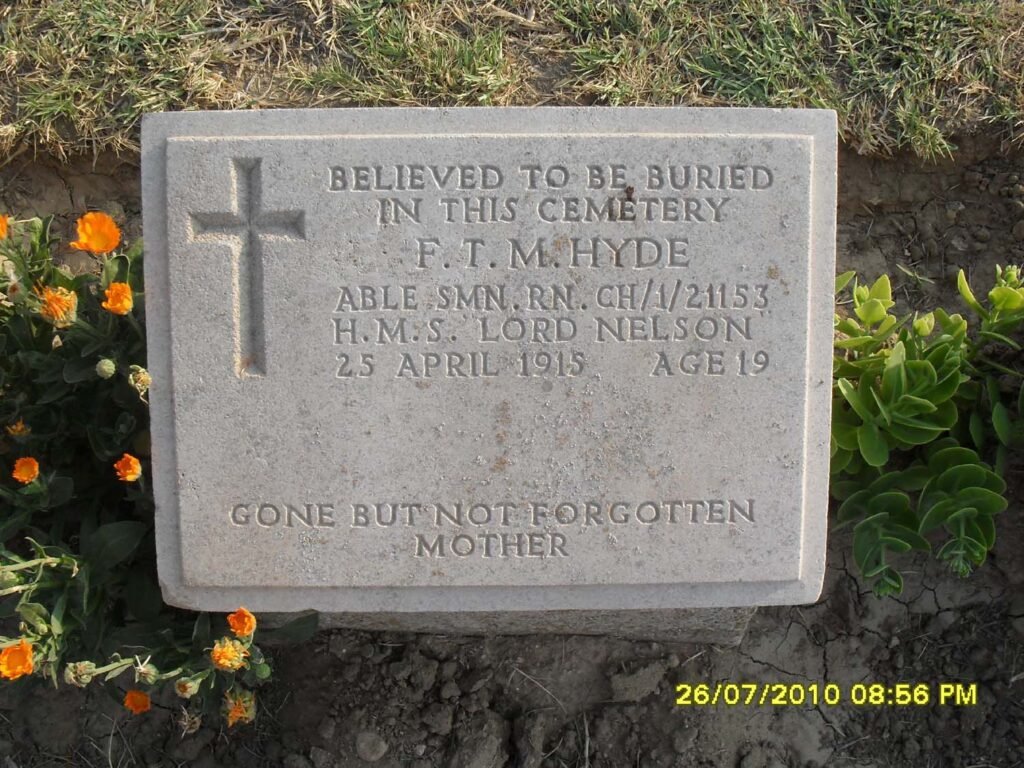
One of those that fell on the 25th April 1915 is a 19 year old Royal Navy Able Seaman who is named on the Hartshorne War Memorial – Frederick Hyde.
Fred Hyde was part of the compliment on HMS Lord Nelson and had been involved in the earlier efforts by the Navy to force the Dardanelles straights. The difficulties and the failure to clear and force the straights meant that land forces had to be committed so that the peninsula could be secured and the coastal guns and the hidden howitzers, that had troubled the navy so much could cleared.
The only way to do this was to land troops onto a number of very small and limited beaches. Such a size and scale of Amphibious operation had not been done before and given that the planning for this was done in a period of 5 weeks meant that landings would be done using what was at hand. With the best luck this was going to be a very difficult task.
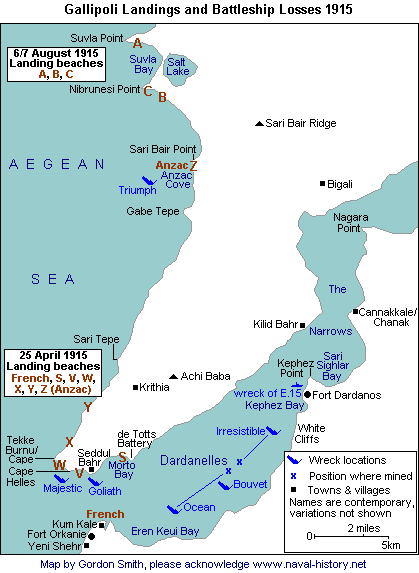
Landings would take place at a number of beaches and they were given the following designations – French Beach (for the French troops and on the east side of the Dardanelles), S Beach, V Beach, W Beach, X Beach, Y Beach and further to the North Z Beach which became known as ANZAC Cove.
I’m going to focus on V Beach as this is the one that involved Able Seaman Fred Hyde. The beach is quite limited in depth and isn’t particularly wide but it is overlooked by a number of low lying ridges and also the the old fort and coastal defences at Sedd-el-Bar.
The plan was to land the Dublin Fusiliers battalion using Ships boats, initially towed using steam tugs and a collier. these boats would be towed as close as possible and then they would row the last part to the shore. they could take about 20 soldiers and they would provide the rowers as well. The Royal Navy would provide sailors to man and operate the boats onto and off the beach. These men would come from across the fleet.
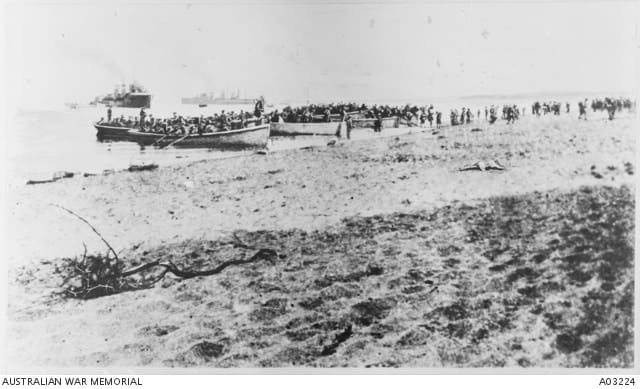
HMS Lord Nelson would provide 10 Able Seamen to man the boats of which Fred Hyde was one. The following is an extract taken from the Dispatch from Vice Admiral John de Robeck RN to the Secretary of the Admiralty and reported on the landings. This extract focuses on the details and defences at V Beach and with this information you can start to understand the fate of the Royal Navy men that crewed the boats in the initial landing, one of whom was Fred Hyde.
“V beach is situated immediately to the west of Sedd-el-Bar. Between the bluff on which stands Sedd-el-Bahr village and that which is crowned by No. 1 Fort the ground forms a very regular amphitheatre of three or four hundred yards radius. The slopes down to the beach are slightly concave, so that the whole area contained within the limits of this natural amphitheatre, whose grassy terraces rise gently to a height of a hundred feet above the shore, can be swept by the fire of a defender. The beach itself is a sandy strip some 10 yards wide and 350 yards long, backed along almost the whole of its extent by a low sandy escarpment about 4 feet high, where the ground falls nearly sheer down to the beach. The slight shelter afforded by this escarpment played no small part in the operations of the succeeding thirty-two hours.
At the south-eastern extremity of the beach, between the shore and the village, stands the old fort of Sedd-el-Bahr, a battered ruin with wide breaches in its walls and mounds of fallen masonry within and around it. On the ridge to the north, overlooking the amphitheatre, stands a ruined barrack. Both of these buildings, as well as No. 1 Fort, had been long bombarded by the fleet, and the guns of the forts had been put out of action; but their crumbled walls and the ruined outskirts of the village afforded cover for riflemen, while from the terraced slopes already described the defenders were able to command the open beach, as a stage is overlooked from the balconies of a theatre.
On the very margin of the beach a strong “barbed-wire entanglement, made of heavier metal and longer barbs than I have ever seen elsewhere, ran right across from the old fort of Sedd-el-Bahr to the foot of the northwestern headland. Two-thirds of the way up the ridge a second and even stronger entanglement crossed the amphitheatre, passing in front of the old barrack and ending in the outskirts of the village. A third transverse entanglement, joining these two, ran up the hill near the eastern end of the beach, and almost at right angles to it.“
The full dispach can be read at the following link –
https://www.naval-history.net/WW1Battle1503Dardanelles2.htm#29264
The following is extracted from the Dispatch that General Ian Hamilton submitted and was published in the London Gazette in July 1915. This extract focuses on the actual landings of the small boats with the Dublin Fusiliers.
“Whilst the boats and the collier were approaching the landing place the Turks made no sign. Up to the very last moment it appeared as if the landing was to be unopposed. But the moment the first boat touched bottom the storm broke. A tornado of fire swept over the beach, the incoming boats, and the collier. The Dublin Fusiliers and the naval boats’ crews suffered exceedingly heavy losses while still in those boats. Those who succeeded in landing and in crossing the strip of sand managed to gain some cover when they reached the low escarpment on the further side. None of the boats, however, were able to get off again, and they and their crews were destroyed upon the beach”
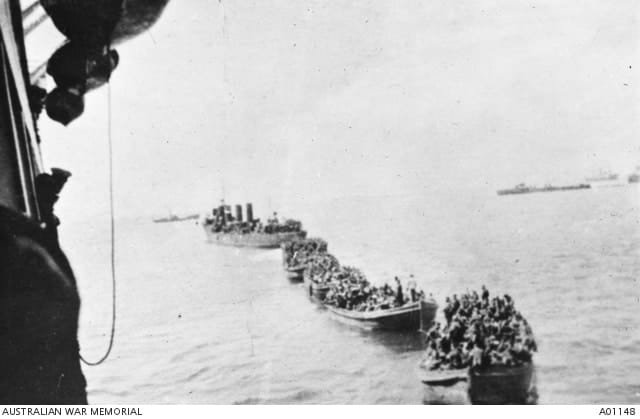
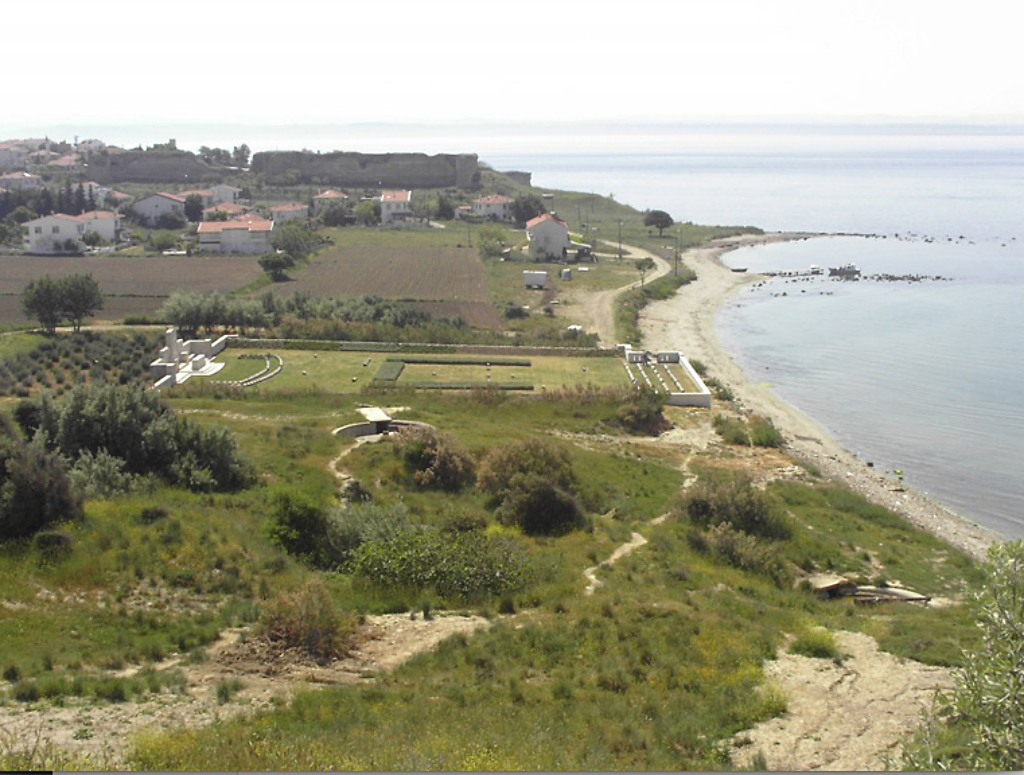
The Turks were waiting and when you consider how tight the boats would be to get in and slow moving it can be seen why the landing was so murderous. As stated in the dispatch the crews suffered heavy losses – all bar one of the Lord Nelson men were killed and the one survivor was wounded. And none of the boats got off the beach. Of those killed was Able Seaman Fred Hyde.
The second wave to come into V Beach was HMS Clyde, which was going to be deliberately rammed onto the beach and via modified openings in her side men would assault ashore via ramps onto pontoons created by the first wave. It didn’t go quite to plan and is a very famous action with a variety of VCs being won through the bravery of the men that day.
But their bravery is not the only ones recognised. there is a whole range of bravery awards given for the landings, of which all 10 of the Able Seamen from the HMS Lord Nelson were awarded a Mention in Dispactches (MiD), of which Fred Hyde of Hartshorne, South Derbyshire is one.
Fred died in the early hours of the 25th April 1915, manning the tiller of a small boat laden with men of the Dublin Fusiliers in the initial landing wave at V Beach of the Gallipoli offensive. His bravery was recognised on the day and a formal award granted. On this Anzac Day, the 25th April, take time to remember and commemorate the Australians and New Zealanders, but also the French, Indian, Irish, the Scots, the Welsh and the English men that fought onto the beaches of Gallipoli. And perhaps just spare a thought for a young 19 year old lad from a South Derbyshire Village called Able Seaman Fred Hyde MiD.